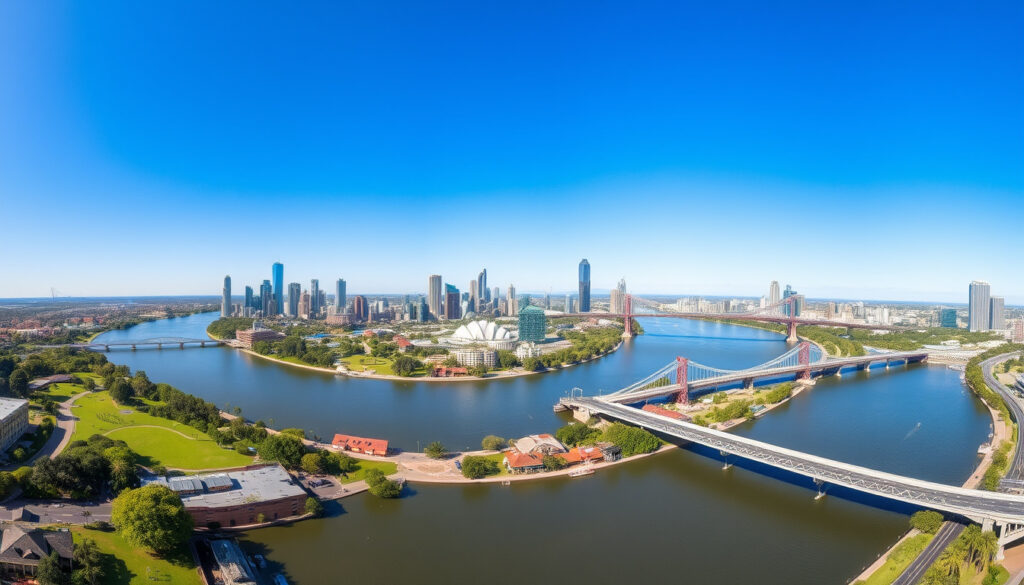
Things to Do in Brisbane: Attractions & Local Tips
Brisbane has shed its sleepy river-city reputation and now commands attention with a dynamic food scene, thriving cultural precincts, and 283 days of sunshine. This guide cuts through the noise with concrete facts, local secrets, and a clear-eyed look at what actually makes Brisbane worth your time.
Population (2023 estimate): 2.3 million · Annual Visitors (2023): 7.8 million · Average Sunny Days per Year: 283 · Number of Public Parks: Over 2,000
Quick snapshot
- Brisbane is the capital of Queensland with a subtropical climate (Wikipedia (encyclopedic reference))
- Lone Pine Koala Sanctuary is the world’s oldest and largest koala sanctuary (Australia.com (official tourism))
- Free CityHopper ferry runs every 36 minutes from 5.30am to midnight (Visit Brisbane (official tourism site))
- Whether Brisbane is “nicer” than Sydney remains subjective (Lonely Planet (travel guide publisher))
- The exact best time to visit depends on personal tolerance for humidity (Bureau of Meteorology (climate data authority))
- Riverfire scheduled Saturday 5 September 2026 (Brisbane Festival (event organiser))
- Gigs & Picnics returns last Saturday of August to October (Visit Brisbane (official tourism site))
- Brisbane continues to invest in public transport and green spaces (Brisbane City Council (local government))
- New dining precincts opening in Howard Smith Wharves (National Geographic (travel authority))
Six key facts, one pattern: Brisbane’s identity is firmly rooted in its subtropical climate and river-side geography.
| Detail | Value |
|---|---|
| Founded | 1825 |
| State | Queensland |
| Population (2023) | 2.3 million |
| Currency | Australian Dollar (AUD) |
| Time Zone | AEST (UTC+10) |
| Climate | Subtropical |
The pattern is simple: geography drives everything — from the free river ferries to the lush parklands that make Brisbane walkable without a big budget.
What are the top 10 things to do in Brisbane?
Top attractions
- Lone Pine Koala Sanctuary – world’s oldest and largest koala sanctuary, open daily (Australia.com (official tourism))
- South Bank Parklands – free lagoon, markets, and cultural precinct (Visit Brisbane (official tourism site))
- Brisbane River cruise – CityCat or free CityHopper for a water-level view (Visit Brisbane (official tourism site))
- Mount Coot-tha Summit Lookout – panoramic city views (Aquarius Traveller (travel blog))
Outdoor activities
- Roma Street Parklands – free subtropical gardens with walking trails (Brisbane City Council (local government))
- Kangaroo Point Cliffs – rock climbing and riverfront walks (Australia.com (official tourism))
- City Botanic Gardens – picnic spot with free guided walks (Visit Brisbane (official tourism site))
Cultural experiences
- Queensland Museum and Sciencentre – interactive science displays (Australia.com (official tourism))
- Gallery of Modern Art (GOMA) – contemporary Australian art (Lonely Planet (travel guide publisher))
- Brisbane City Clock Tower tour – free with a working cage lift (Visit Brisbane (official tourism site))
How to spend 3 days in Brisbane?
Day 1: City exploration
Start at South Bank Parklands for a morning swim in the free lagoon. Walk across the Kurilpa Bridge to the Queensland Museum (Australia.com (official tourism)). Afternoon: hit the Brisbane City Markets at Reddacliff Place on a Wednesday or Cathedral Square on a Thursday (Visit Brisbane (official tourism site)).
Day 2: Nature and wildlife
Morning at Lone Pine Koala Sanctuary – cuddle a koala or hand-feed kangaroos. Take a CityCat ferry back to town for lunch at Eat Street Northshore. Afternoon: hike Mount Coot-tha for sunset views (Aquarius Traveller (travel blog)).
Day 3: Day trips
Moreton Island is a 75-minute ferry ride from Brisbane – snorkel the Tangalooma wrecks or sand-toboggan. Alternatively, take a day trip to the Gold Coast for theme parks or surf beaches (Lonely Planet (travel guide publisher)).
Is Brisbane worth visiting as a tourist?
Pros of visiting Brisbane
- More relaxed vibe than Sydney or Melbourne (Lonely Planet (travel guide publisher))
- Cost of living and accommodation generally lower than southern capitals (Australia.com (official tourism))
- Subtropical climate with mild winters and hot summers (Bureau of Meteorology (climate data authority))
- Free public transport options: CityLoop bus and CityHopper ferry (Visit Brisbane (official tourism site))
Cons to consider
- Summer humidity and thunderstorms can be intense (Bureau of Meteorology (climate data authority))
- Nightlife is more subdued than Sydney or Melbourne (Culture Trip (travel media))
- Public transport stops earlier on weeknights – last CityHopper midnight weeknights, earlier on Sunday (Visit Brisbane (official tourism site))
Comparison with other Australian cities
Brisbane is 20–30% cheaper for accommodation than Sydney, and its airport is closer to the city centre. The trade-off: fewer big-ticket attractions. For first-time visitors to Australia, Brisbane works best as a 2–3 day stopover before heading to the Gold Coast or Great Barrier Reef (National Geographic (travel authority)).
Brisbane gives you value and space, but not the instant iconic landmarks of Sydney. Tourists chasing opera houses or Harbour Bridges should budget a flight south. For everyone else, the slower pace is the point.
Upsides and downsides
Upsides
- Affordable accommodation and dining
- Free public transport loop and ferry
- Subtropical climate – sunny 283 days a year
- Easy access to Gold Coast and Moreton Island
Downsides
- Summer humidity can be uncomfortable
- Less nightlife variety than Sydney/Melbourne
- Public transport limited late at night
- Fewer world-famous landmarks
What’s the best time of year to visit Brisbane?
Seasonal overview
- Spring (September–November): mild temperatures, blooming gardens, perfect for outdoor activities (Bureau of Meteorology (climate data authority))
- Summer (December–February): hot and humid, frequent thunderstorms, but many free events (Visit Brisbane (official tourism site))
- Autumn (March–May): warm days, cooler nights, lower humidity – ideal for hiking
- Winter (June–August): cool, dry, and sunny – best for outdoor sightseeing without the heat
Events and festivals
- Brisbane Festival (September) – includes Riverfire, free music, and art installations (Brisbane Festival (event organiser))
- Ekka (August) – Queensland’s royal show at the Brisbane Showgrounds
- City Sounds – Australia’s largest free live music program, year-round (Visit Brisbane (official tourism site))
- Friday Latin Nights – every Friday 5pm–11pm at South Bank (Visit Brisbane (official tourism site))
Weather considerations
The humidity peaks in January and February. If you’re heat-sensitive, plan for spring or autumn. The Bureau of Meteorology (climate data authority) records average summer highs of 30°C and winter lows of 10°C. Afternoon thunderstorms are common in summer but usually brief.
First-time visitors often underestimate the summer humidity. The Bureau of Meteorology (climate data authority) shows February as the wettest month – pack a light rain jacket even on sunny forecasts.
What do locals do in Brisbane?
Hidden gems
- West End markets – locals shop for organic produce and artisan foods on weekends (Visit Brisbane (official tourism site))
- New Farm’s James Street – boutique shopping and café culture (The Wanderbug (travel blog))
- Brisbane Powerhouse – arts venue in a former power station with riverside dining
Local hangouts
- Howard Smith Wharves – bars and restaurants under the Story Bridge
- South Bank’s Streets Beach – free man-made lagoon for a dip without leaving the city
- Roma Street Parklands – locals picnic, jog, and cycle through 16 hectares of subtropical gardens (Brisbane City Council (local government))
Weekend activities
- Fishing and kayaking on the Brisbane River – spots include Kangaroo Point and New Farm Park
- Hiking Mount Coot-tha – trails from 400m to 2.5km with panoramic views (Aquarius Traveller (travel blog))
- Riverlife Adventure Centre – kayaking, cycling, and abseiling at Kangaroo Point Cliffs
Essential planning steps for your Brisbane trip
- Book accommodation early – especially during festival months (August–September). Consider South Bank or the City for walkable access. For a heritage-style stay, check Oaks Sydney Goldsbrough Suites as a reference.
- Master free transport – the CityLoop bus runs every 10 minutes Monday–Friday from QUT to Eagle Street. The CityHopper ferry runs every 36 minutes from 5.30am to midnight (later Friday/Saturday) (Visit Brisbane (official tourism site)).
- Check event calendars – use the Brisbane City Council (local government) event search for free festivals, workshops, and markets.
- Pack for humidity – light layers, a rain jacket, and sunscreen year-round (Bureau of Meteorology (climate data authority)).
- Plan day trips early – Moreton Island ferries and Gold Coast trains can fill up in peak season.
Most tourists arrive without a transport strategy and end up spending AUD$40+ per day on rideshares. Using the free CityHopper and CityLoop can save a family of four over AUD$200 in three days.
Clarity check
Confirmed facts
- Brisbane is capital of Queensland
- Subtropical climate with 283 sunny days per year
- Lone Pine Koala Sanctuary open daily
- Free CityHopper ferry operates year-round
- Riverfire scheduled for 5 September 2026
What’s unclear
- Whether Brisbane is “nicer” than Sydney is subjective
- Exact best time varies by personal humidity tolerance
- Real cost difference vs. Sydney depends on season and accommodation type
What locals and experts say
“The biggest secret about Brisbane is that you don’t need to spend a cent to have a great day. The CityHopper, the Botanic Gardens, and the weekend markets – that’s how real Brisbane lives.”
– Local Brisbane tour guide
“Brisbane’s food scene has doubled in size over the last five years. The river dining precinct at Howard Smith Wharves alone added 15 new venues. It’s no longer just a pit stop – it’s a destination.”
– Queensland Tourism official
For travellers on a budget or first-timers in Australia, Brisbane delivers a relaxed urban experience without the Sydney price tag. The free transport network and abundant parks make it easy to explore without spending, but summer humidity and limited late-night transit are real trade-offs. For a visitor from New Zealand or the UK, the choice is clear: fly into Brisbane for a 3-day river-city immersion, then head north to the reef or south to the Gold Coast. If you’re planning a longer trip, check the latest Australia New Zealand visa changes to ensure your documentation is up to date.
eventbrite.com, youtube.com, humanitix.com, youtube.com, reddit.com, sg.trip.com, instagram.com
Frequently asked questions
Is Brisbane expensive for tourists?
Brisbane is generally more affordable than Sydney and Melbourne. Accommodation costs 20–30% less on average, and many top attractions are free – including the City Botanic Gardens, South Bank lagoon, and the CityHopper ferry (Visit Brisbane (official tourism site)). Expect AUD$80–150 per night for mid-range hotels.
What is the best way to get around Brisbane?
Use the free CityLoop bus (weekdays, every 10 minutes) and the free CityHopper ferry (daily, every 36 minutes). For longer trips, the Go Card system covers trains, buses, and CityCats (Visit Brisbane (official tourism site)).
Are there free things to do in Brisbane?
Yes: South Bank Parklands, Roma Street Parklands, Brisbane City Clock Tower tours, CityHopper ferry, CityLoop bus, and the City Botanic Gardens are all free. Friday Latin Nights and City Sounds concerts are also free (Visit Brisbane (official tourism site)).
What is the weather like in Brisbane?
Subtropical: hot summers (up to 30°C), mild winters (around 10°C low). Expect
More related posts
 32 USD to NZD: Convert US Dollars to New Zealand Dollars Today
 Fever Tree Tonic NZ: Where to Buy, Prices & Reviews
 Cheapest Unlimited Broadband NZ 2026: Plans Under $70
 Internet Cafe Near Me in Ireland: Open Spots & Prices
 NCEA Level 3 Chemistry: Syllabus, Standards, and Requirements
 Prince Harry Fights Tears LA – Aviation Award and Diana Tribute Details
 LG ThinQ Washing Machine: Setup, Reviews & Troubleshooting
 2025 NZ Golf Open: Dates, Venue, Prize Money & Winner