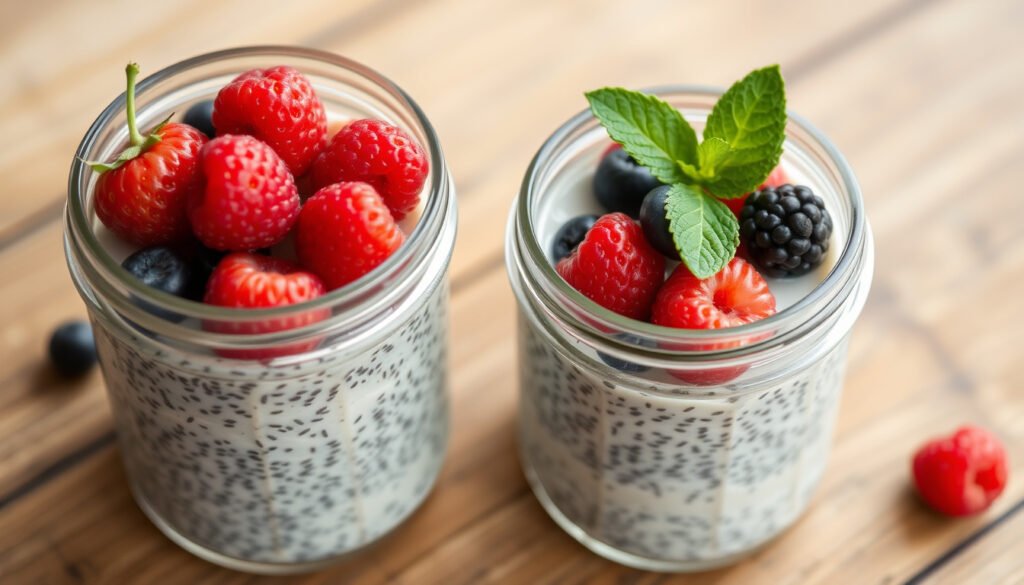
Chia Seed Pudding Recipe: Perfect Ratio & Health Benefits
There’s something quietly satisfying about a chia seed pudding that sets up while you sleep. With just a few tablespoons of seeds and your milk of choice, you can wake up to a creamy, nutritious breakfast that’s been doing the work for you. But beyond convenience, the question many people ask is whether this trendy pudding actually earns its health halo.
Calories per serving: 180 kcal ·
Fiber per serving: 10 g ·
Omega-3 fatty acids per serving: 5 g ·
Protein per serving: 5 g ·
Soaking time: 4-8 hours (overnight) ·
Shelf life in fridge: Up to 5 days
Quick snapshot
- ~180 kcal per serving (based on 40 g dry seeds + 1 cup milk) (Mayo Clinic Health System (healthcare provider))
- 10 g fiber (40% DV) (Mayo Clinic Health System)
- 5 g protein (Mayo Clinic Health System (healthcare provider))
- 5 g omega-3s (ALA) (Mayo Clinic Health System (healthcare provider))
- Supports digestion (Harvard Health (Harvard Medical School publication))
- May lower triglycerides (PubMed Central (NIH peer-reviewed review))
- Promotes fullness (Healthline (health information publisher))
- Rich in antioxidants (WebMD (medical news and reference site))
- Always soak before eating (Mayo Clinic Health System)
- Limit to 2-3 tablespoons per day
- Consult doctor if on medication
- Avoid if you have dysphagia (Mayo Clinic Health System)
- Use 1 part chia seeds to 3-4 parts liquid (Natasha’s Kitchen (recipe blog))
- Stir after 5 minutes to prevent clumps (Eating Bird Food (recipe blog))
- Refrigerate at least 4 hours (Oh She Glows (plant-based recipe blog))
- Add sweetener and flavor before chilling (Love and Lemons (healthy recipe blog))
Six key numbers, one takeaway: chia pudding packs serious nutrition into a small serving.
| Nutrition detail | Value per serving |
|---|---|
| Serving size | 1/4 cup dry chia seeds (40g) mixed with 1 cup liquid |
| Calories | 180 kcal |
| Fiber | 10g (40% DV) |
| Omega-3 (ALA) | 5g |
| Protein | 5g |
| Soaking time | At least 4 hours, best overnight |
How to make good chia pudding?
What is the best ratio for chia pudding?
Getting the texture right starts with the liquid-to-seed ratio. The most common starting point is 1 part chia seeds to 4 parts milk for a thick but spoonable pudding, as recommended by Natasha’s Kitchen (recipe blog). If you prefer a denser, flan-like consistency, a ratio of 1:3 (e.g., 3 tablespoons seeds to 1 cup milk) works nicely, according to Nourished By Nutrition (healthy recipe blog). Some recipe developers recommend 3 to 4 tablespoons of seeds per cup of milk for preferred consistency (Eating Bird Food (recipe blog)). The 1:4 ratio is a safe, crowd-pleasing baseline.
Quick chia seed pudding method
- Mix: Combine seeds and liquid (any milk or coconut water) in a jar or bowl. Add a pinch of salt, sweetener (maple syrup, honey), and flavor (vanilla, cinnamon, cocoa). Stir well.
- Stir again: After 5 minutes, stir again to break up clumps, as advised by Eating Bird Food.
- Chill: Refrigerate for at least 4 hours, preferably overnight (Oh She Glows (plant-based recipe blog)).
- Top: Before serving, stir again and add fruits, nuts, or seeds.
For an even creamier result, use full-fat coconut milk or whole dairy milk rather than thin almond milk, as noted by A Beautiful Plate (cooking blog). For more no-fuss meal ideas, see our Quick and Easy Dinner Ideas.
The implication: dial in the ratio, and texture becomes predictable every time.
Are chia puddings actually healthy?
What happens if I eat chia seed pudding every day?
Chia seeds are a nutrient-dense food. They are an excellent source of fiber, omega-3 fatty acids, and protein, according to Mayo Clinic Health System (nonprofit healthcare provider). A standard serving (40g of seeds + 1 cup milk) provides about 180 calories, 10g fiber (40% of the Daily Value), and 5g each of protein and omega-3s.
“Daily chia consumption supports digestive health, helps lower cholesterol, and can aid weight management.”
But moderation matters. Because of its calorie density, a single serving can easily tip into a full meal’s worth of energy. For most people, one serving a day is a safe and beneficial addition to a balanced diet. WebMD adds that chia seeds may improve blood sugar levels and provide antioxidant protection (WebMD).
Daily chia pudding can be a nutritional upgrade — but only if you watch the rest of your day’s calories. The fiber alone is a win for most people, but the omega-3s and protein make it a rare triple threat.
The pattern: one serving fits a balanced diet; two servings may crowd out other nutrients.
Is chia pudding ok for weight loss?
Can chia seeds reduce belly fat?
The fiber and protein in chia seeds promote satiety, which can help reduce overall calorie intake — a cornerstone of weight loss. However, no single food targets belly fat directly. Weight loss is systemic and occurs only when you maintain a calorie deficit. Chia pudding can be part of that strategy, provided you avoid turning it into a high-calorie dessert. Stick to unsweetened milk, skip the honey or maple syrup (or use a sugar substitute), and go easy on nut butters, chocolate chips, and dried fruit.
Healthline (health information site) notes that chia seeds’ soluble fiber forms a gel in the stomach, which can delay digestion and increase fullness. This effect, combined with moderate protein (5g per serving), makes chia pudding a naturally weight-loss-friendly breakfast — as long as the total spoonfuls stay within your daily calorie budget.
What this means: portion control determines whether chia pudding aids or hinders weight goals.
Do chia seeds lower triglycerides?
What cleans cholesterol out of your body?
Yes, evidence suggests chia seeds can improve lipid profiles. A peer-reviewed review published in PubMed Central (NIH’s free full-text archive) reports that chia seed components may reduce cardiovascular disease risk factors, including triglycerides, cholesterol, and blood pressure. The omega-3 alpha-linolenic acid (ALA) in chia seeds is particularly credited for reducing triglyceride levels.
Additionally, the high soluble fiber content binds to cholesterol in the digestive tract and helps excrete it, rather than letting it enter the bloodstream. Harvard Health reiterates that these combined effects support better cholesterol numbers. For another natural wellness option, explore our guide on Raspberry Leaf Tea NZ.
“Chia seed components may help cardiovascular disease risk factors such as blood pressure, platelet aggregation, cholesterol, and oxidation.”
The catch: chia seeds support lipid improvements, but overall diet quality matters more than any single ingredient.
Who should not eat chia seeds?
What not to mix with chia seeds?
“People with dysphagia (swallowing difficulties) should never consume dry chia seeds — they absorb water rapidly and can form a gel that may obstruct the esophagus.”
— Mayo Clinic Health System (nonprofit healthcare provider)
Chia seeds are safe for most people, but there are important exceptions. The Mayo Clinic Health System explicitly warns against the swallowing risk for those with dysphagia. Also, chia seeds may interact with blood-thinning medications (e.g., warfarin) and blood pressure drugs due to their omega-3 content and potential to lower blood pressure. Anyone on such medications should consult a doctor before adding chia seeds to their daily diet. Avoid mixing chia seeds with any dry, powdery ingredient (like protein powder) that could increase choking hazard. Excessive intake — more than 4-5 tablespoons per day — can cause bloating, gas, or digestive discomfort.
For most people, chia seeds are fine — but the swallowing risk for those with dysphagia is real and serious, and medication interactions are under-discussed.
What this means: most eaters can proceed safely, but the exceptions deserve attention.
For a step-by-step approach with clear health benefits, you can also follow this overnight chia pudding recipe that explains the science behind the gel formation.
Frequently asked questions
Can I make chia pudding with water instead of milk?
Yes, but the texture will be less creamy and the flavor blander. Using milk (dairy or plant-based) adds creaminess and a richer taste. If you use water, consider adding coconut cream or a splash of vanilla and sweetener to improve the flavor.
How long does chia pudding last in the refrigerator?
Store in a sealed container for up to 5 days. The texture may thicken further over time; thin with a little milk before serving if needed.
Is chia pudding suitable for keto diet?
Yes. With about 2g net carbs (if using unsweetened almond milk) and 10g fiber per serving, it fits a keto macro profile. Just avoid adding high-carb sweeteners or fruits.
Can I eat chia pudding if I am diabetic?
Yes, in moderation. The high fiber and protein help stabilize blood sugar, but total carbohydrates still matter. Use unsweetened milk and no added sugar to keep it diabetic-friendly.
Should I grind chia seeds for better absorption?
Grinding increases the availability of omega-3s, but whole seeds still provide fiber and help with satiety. For pudding, whole seeds give the signature gel texture. If you grind them, the pudding will be less gelatinous.
Does chia pudding need to be stirred again after soaking?
Yes, after the initial mix, stir again around the 5-minute mark to break up clumps. Once fully soaked, a light stir before serving redistributes the liquid evenly.
Can I freeze chia pudding?
Yes, but the texture may change — it can become icier and lose some creaminess. Thaw in the fridge and stir well before eating. Freezing works best if you plan to blend it into a smoothie later.
The evidence-backed takeaway is this: chia seed pudding is more than a trendy breakfast. It delivers meaningful amounts of fiber, protein, and omega-3s in a format that’s hard to beat for convenience. For anyone looking to improve their diet — whether for weight management, heart health, or simply a better morning routine — the choice is clear: use a 1:4 ratio, soak overnight, and keep the toppings in check. Or you’ll end up with a calorie bomb dressed as health food.
More related posts
 New Zealand Road User Charges Calculator: Cost per km
 Stand By Me Chords: Guitar, Ukulele, Piano, Easy & Oasis
 25 Pounds in kg – Easy Conversion and Common Comparisons
 Netball NZ vs Australia: Constellation Cup 2025 Results
 Margaret Stoddart Retirement Village – Christchurch Care Guide
 Denver Nuggets vs Clippers: Score, Stats & Prediction
 Keno Result Today Live – NZ Winning Numbers
 Valentino Born in Roma: What It Smells Like & Is It Worth It