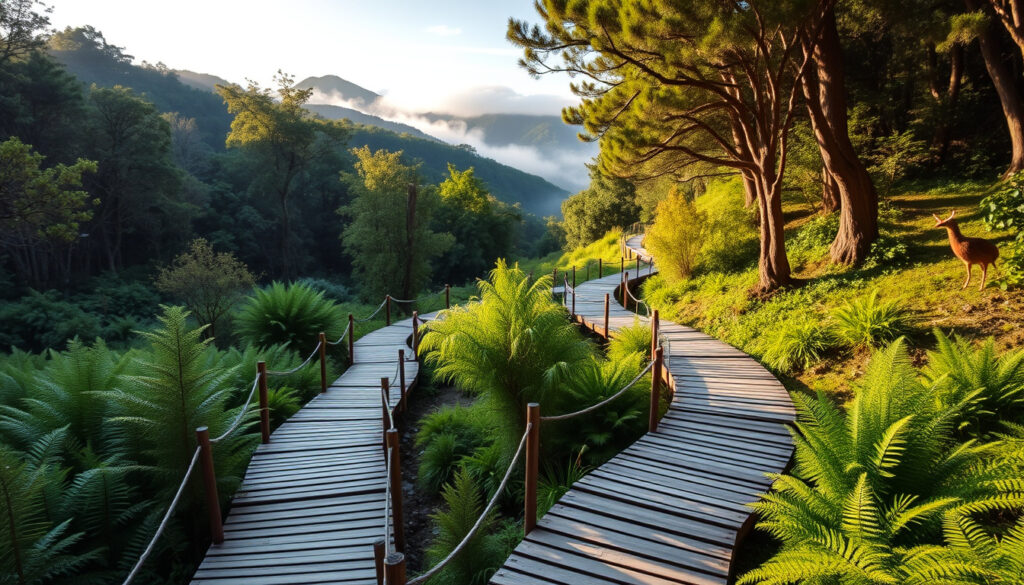
Pūkaha National Wildlife Centre: Hours, Tours, Reviews & Guide
Few places in New Zealand give visitors such a close view of what it actually takes to save a bird species from extinction. At Pūkaha National Wildlife Centre, the work happens in plain sight—inside kiwi nursery incubators, across managed forest, and alongside the rangers who spend their days preparing captive-bred birds for life back in the wild. It’s a working conservation site, not a zoo, and that distinction shapes everything about the experience.
Location: SH2, 30 km north of Masterton ·
Hours: 9am–5pm daily (6pm summer) ·
Tours: 10am & 2pm daily ·
Distance from Wellington: ~2 hours drive
Quick snapshot
- Open 9am–5pm daily, closing only on Christmas Day (Pūkaha Official)
- Located at 85379 State Highway 2, Mount Bruce (Department of Conservation)
- 1-hour guided ranger tours at 10am and 2pm, booking required (Tourism New Zealand)
- Current 2026 entry fees (2018 data shows adult $20 NZD; confirm directly)
- Night tour schedule details and seasonal variations
- Exact volunteer and donation programme specifics
- Summer hours (9am–6pm): last Sunday in September to first Sunday in April (Pūkaha Official)
- Winter hours (9am–5pm): first Sunday in April to last Sunday in September (Pūkaha Official)
- Spring offers peak nesting bird viewing (Tourism New Zealand)
- Centre continues breeding programmes for kōkako, kākā, whio, and kiwi
- Te Hīkoi o Pūkaha cultural tours expand local iwi engagement
- Visitor numbers reported stable; reviews highlight consistent quality
Below is a reference table summarising the centre’s core operational facts.
| Fact | Detail |
|---|---|
| Official Name | Pūkaha National Wildlife Centre |
| Former Name | Mount Bruce Wildlife Centre |
| Address | 85379 State Highway 2, Mount Bruce, Wairarapa |
| Area | 942 hectares of native podocarp forest |
| Summer Hours | 9:00am–6:00pm (last Sun Sep to first Sun Apr) |
| Winter Hours | 9:00am–5:00pm (first Sun Apr to last Sun Sep) |
| Closed | Christmas Day only |
| Guided Tours | 10:00am & 2:00pm daily, booking essential |
| Kiwi Talk | 12:00pm daily |
| Contact | 06 375 8004 · info@pukaha.org.nz |
Pūkaha National Wildlife Centre opening hours
The centre keeps things simple on the calendar front. It opens every day of the year except Christmas Day, according to the official Pūkaha website. Hours shift with the seasons: summer brings an extended 9:00am to 6:00pm window (running from the last Sunday in September to the first Sunday in April), while winter contracts to 9:00am to 5:00pm.
Daily schedule
For visitors planning their time, the Tararua visitor guide lists a full programme of ranger talks. Takahē talks run at 10:30am, tuatara at 11:30am, kiwi at 12:00pm, eel feeding at 1:30pm, kākā at 3:00pm, and an aviary talk at 4:00pm. The Kākā Café closes earlier than the centre itself—at 4:00pm in winter and 5:00pm in summer.
Morning visitors catch the most talks in a single visit. Arriving at opening and working through to midday gives you six of seven scheduled presentations in about three hours.
Exceptions and closures
Christmas Day is the sole closure date. Last entry is set at 4:00pm daily per the Tararua guide, and self-guided tickets remain valid all day—no need to arrive at the booked time if something runs over.
The pattern shows that summer’s extended 6pm closing gives visitors an extra hour but only one additional talk slot at 4pm—worth it if you’re already on-site, but not enough to justify a separate trip.
Pūkaha National Wildlife Centre reviews
Visitor feedback consistently identifies what sets this place apart from a typical wildlife park. Rankers NZ reviews highlight the educational value, baby kiwi feeding experiences, kokako viewing opportunities, and staff talks covering tuatara, kokako, and kākā. One recurring theme: this is not a zoo. The birds are bred and prepared for eventual release back into managed wild populations.
Visitor feedback highlights
TripAdvisor visitors praise the clean facilities, quality of the on-site brunch, and the unusual experience of wild birds moving freely through the grounds. Multiple reviewers describe the centre as New Zealand’s most established captive breeding facility, a descriptor corroborated by the scale of breeding programmes running on-site.
TripAdvisor ratings
The centre maintains consistent marks for animal welfare compliance and visitor experience quality. Wanderlog reviews describe it as a large, open facility with good maps for self-exploration. Visitor duration typically runs one to two hours for those doing the main tracks and attending at least one talk.
Review dates span several years—cross-reference the most recent reviews for current crowd levels and any operational changes before planning your visit.
The credibility of visitor accounts stems from what they describe seeing: not entertainment programming, but the daily mechanics of a working breeding facility. That authenticity distinguishes Pūkaha from operations designed primarily for tourism.
Services offered by Pūkaha National Wildlife Centre
The centre offers a structured mix of guided and self-guided experiences. Pūkaha’s official experience page outlines what’s available, with bookings required for the ranger-led programmes and Hapori local rates available for regional residents.
Guided tours
One-hour ranger tours depart at 10:00am and 2:00pm daily. Night tours operate after the centre closes, though times vary by season and demand. Tourism New Zealand notes booking is essential for all ranger-led experiences, and check-in must occur before 5:00pm for daytime programmes.
Te Hīkoi o Pūkaha offers a different angle—a two-hour cultural walk guided by local iwi, covering the stories, plants, and creatures of the area with narratives unavailable through the standard ranger programme.
Bush walks
The centre’s 942-hectare podocarp forest offers multiple tracks for self-guided exploration. The Department of Conservation confirms all main tracks are wheelchair-accessible, with a kiwi nursery, free-flight aviary, and viewing areas along the network.
Kākā Café
The on-site café serves food and drinks with closing times tied to season—4:00pm in winter, 5:00pm in summer. Visitor reviews consistently mention the brunch quality as a pleasant surprise for a remote location.
The centre is genuinely remote—30km north of Masterton along State Highway 2. There’s no other food option within easy distance. Plan lunch around the café’s closing times or bring your own.
The centre sits between Wellington and Napier—a useful stop if you’re already traversing the route, but not worth the detour if you’re based elsewhere. Build it into a Wairarapa visit, not as a standalone destination.
The two callouts together illustrate the practical reality: the remote setting is both the draw and the constraint. Visitors who plan around the café’s limited hours get a substantially better experience than those who treat the centre as a casual roadside stop.
Pūkaha Mount Bruce location and getting there
The centre sits at 85379 State Highway 2, Mount Bruce, placing it approximately 30 kilometres north of Masterton and 10 kilometres south of Eketahuna. The Department of Conservation lists driving times of two to three hours from Wellington or Napier, and around one hour from Palmerston North.
Location details
Mount Bruce is unremarkable from the road—a rural locality in the Wairarapa-Tararua border area. The centre itself is set back from State Highway 2, with signage directing visitors to the entrance. There’s car parking on-site, and the approach is straightforward even for first-time visitors unfamiliar with the area.
Getting there
No public transport serves the site directly. The practical options are driving yourself or joining an organised tour from Masterton, Wellington, or Palmerston North. WellingtonNZ includes Pūkaha in regional itinerary planning, positioning it as a full-day or half-day excursion from the capital.
Pukaha birds and conservation work
The centre’s breeding programmes target endangered native birds with the explicit goal of releasing individuals back into managed wild populations. According to WellingtonNZ, species currently in the breeding rotation include kōkako, kākā, whio (blue duck), pateke (brown teal), shore plover, kiwi, and kākāriki.
Native species
Multiple species are visible to visitors in naturalistic enclosures and the free-flight aviary. The kiwi programme receives the most attention—daily talks at 12:00pm cover the captive breeding process, and the kiwi nursery gives visitors a direct view of the incubation and rearing work. Takahē, kōkako, and tuatara also feature prominently in the daily schedule.
Breeding programmes
The Department of Conservation identifies the kiwi nursery and free-flight aviary as key visitor features, though specific current population figures and recent release numbers are not consistently published in available sources. Spring offers the best chance to observe nesting behaviour, per Tourism New Zealand.
Upsides
- Authentic conservation work—birds bred for release, not display
- Daily talks programme covers multiple species
- Remote forest setting with genuine wildlife atmosphere
- Wheelchair-accessible tracks throughout
- Te Hīkoi o Pūkaha cultural tour adds depth unavailable elsewhere
Downsides
- Remote location requires dedicated driving time
- No public transport access
- Limited café hours may frustrate longer visits
- Many birds in enclosure settings—not all free-roaming
- Current entry pricing unavailable online (2018 data outdated)
The breeding programmes contribute to species recovery beyond the centre itself—when birds are released into managed wild populations, the benefit extends to ecosystems across the Wairarapa region.
A step-by-step visit guide
Most visitors spend one to two hours on-site, according to TripAdvisor reviews. Here’s how to structure a morning or afternoon visit for maximum talks and minimum rushing.
- Arrive at opening or shortly after — 9:00am gives you the full day. If you’re joining a 10:00am ranger tour, arrive by 9:45am to check in and find your way.
- Start with the kiwi nursery — It’s the most distinctive feature and the 12:00pm talk provides context for what you’re seeing.
- Attend the morning talks block — Takahē (10:30am) and tuatara (11:30am) before the midday kiwi talk.
- Break for lunch at Kākā Café — Check closing times (4pm winter, 5pm summer) and plan accordingly.
- Take the 2:00pm ranger tour — Booking required; covers behind-the-scenes work not visible from public tracks.
- Finish with afternoon talks — Eel feed at 1:30pm, kākā at 3:00pm, aviary at 4:00pm, then exit before last entry time.
Booking the 10:00am ranger tour and arriving the day before the centre opens gives you two full days of talks across the two tour slots. It’s a disproportionate amount of programme time for a modest accommodation cost in Masterton.
Arriving at opening and committing to both ranger tour slots gives visitors access to six of seven scheduled talks plus the behind-the-scenes programme—not a bad return for the drive time from Wellington.
“We are open every day of the year except Christmas Day!”
— Official Pūkaha Website
“This is not a zoo, the birds are bred and prepared for release.”
For visitors making the two-hour drive from Wellington, Pūkaha works best as part of a broader Wairarapa itinerary rather than a standalone stop. The conservation work happening on-site is genuine and ongoing—breeding programmes continue, birds are released, and rangers are actively engaged in the work daily. That authenticity shows in the talks, the enclosures, and the way staff speak about individual birds. It’s not polished for tourism in the way some captive wildlife operations are, and that restraint is part of what makes the visit feel credible.
Related reading: Wai-O-Tapu Thermal Wonderland · Rotorua White Water Rafting
tripadvisor.com, tripadvisor.com, zoochat.com, baldhiker.com, bookme.co.nz
Kiwi conservation efforts like those at Pūkaha extend to the South Island, where the West Coast Wildlife Centre operates New Zealand’s largest hatching facility near Franz Josef.
Frequently asked questions
How far is Pūkaha National Wildlife Centre from Wellington?
Approximately 2 hours’ drive via State Highway 2 through the Wairarapa. The route passes through Masterton, with the centre another 30km north on SH2.
Do I need to book tours at Pūkaha?
Yes—the 1-hour guided ranger tours at 10:00am and 2:00pm require advance booking. Te Hīkoi o Pūkaha cultural tours also require booking. Self-guided entry does not require a specific arrival time within the day.
What should I bring when visiting Pūkaha?
Comfortable walking shoes, weather-appropriate clothing, and water. The tracks are well-maintained but the terrain is rural. Bring cash or card for entry fees and the café, though current pricing should be confirmed directly with the centre before visiting.
Is Pūkaha suitable for families?
Yes—the centre is wheelchair-accessible throughout, and the daily talks programme keeps children engaged. The free-flight aviary and kiwi nursery are particular draws for younger visitors. The Kākā Café offers food without requiring families to leave the site.
Are there accommodation options near Pūkaha?
Masterton (30km south) offers the closest accommodation options, including motels and hotels suitable for an overnight stay combining Pūkaha with other Wairarapa attractions. No accommodation exists at the centre itself.
What is the entry fee for Pūkaha National Wildlife Centre?
The most recent published pricing (April 2018) showed adult entry at approximately $20 NZD and children aged 5–15 at around $6 NZD, with under-5s free. Current pricing should be confirmed directly with the centre, as the 2018 figures may have changed.
Can I feed animals at Pūkaha?
Visitors cannot feed the managed breeding birds, but daily eel feed talks allow close observation of the longfin eels in the pond system. The focus is on managed conservation programmes, not interactive feeding experiences.
More related posts
 Xbox Game Pass Ultimate: $29.99 Price Hike & Deals
 Wordle Words Not Used – Full List of Unused Answers
 Start a Business in NZ: Costs, Tax & Checklist
 Sex on the Beach Cocktail: IBA Recipe, Ingredients & UK Tips
 2025 NZ Golf Open: Dates, Venue, Prize Money & Winner
 Wellington Station Signal Failure: Causes, Impact & Updates
 Cheap Flights Auckland to Queenstown: $49 Deals, Direct Air NZ
 Power TV Series: Cancellation, Spin-offs & 2026 Future