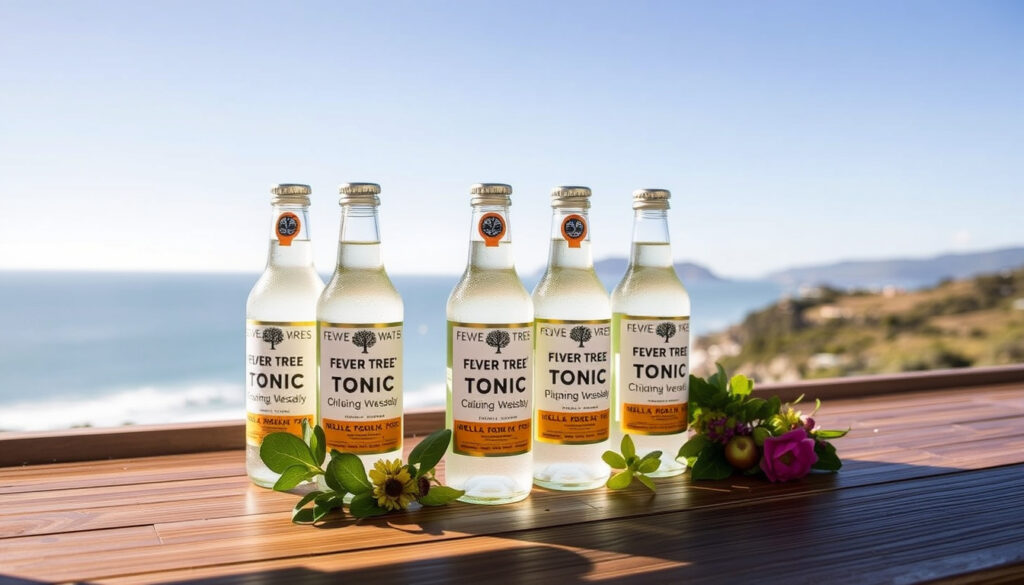
Fever Tree Tonic NZ: Where to Buy, Prices & Reviews
Fever Tree has become shorthand for “premium mixer” in bars worldwide — you don’t have to leave New Zealand to get your hands on it. Here’s everything you need to know about finding Fever Tree tonic in NZ, what you’re actually paying for, and whether it’s worth the premium.
Available stores: Woolworths NZ, Pak n Save, Liquor Cellar · Key ingredient source: Quinine from fever trees, Eastern Congo · Botanicals used: Mexican bitter oranges, spring water · Common sizes: 150ml cans, 200ml, 500ml bottles · NZ retailers listed: Countdown, New World, Hancocks
Quick snapshot
- Woolworths NZ stocks Premium Indian Tonic Water (Woolworths NZ)
- Pak’nSave carries 500ml Premium Indian Tonic (Pak’nSave)
- Fever Tree Elderflower 500ml costs $5.39 at Pak’nSave Royal Oak (PriceGrabber NZ)
- Exact current prices vary by retailer and location
- Stock status changes frequently across stores
- Sugar content differs between standard and light variants without clear labels
- Countdown rebranded as Woolworths NZ (Woolworths NZ)
- Online delivery options expanded in recent years (Woolworths NZ)
- More specialty retailers now stocking the brand (Woolworths NZ)
- More retailers expected to add Fever Tree to permanent stock
- Light and variety-specific releases likely to expand
- Delivery services compete aggressively on speed and price
| Label | Value |
|---|---|
| Brand Origin | UK-based premium mixer |
| Quinine Source | Fever trees, Eastern Congo |
| NZ Stockists | Woolworths, Pak n Save, Liquor Cellar |
| Popular Size | 500ml bottles, 150ml cans |
| Light Option | Lower sugar variants available |
| Unit Price (Pak’nSave) | $10.78/L |
| Delivery Services | GoPotatoes, Fine Wine Delivery, Liquor Legends |
| Express Delivery Fee | $14.99 (Fine Wine Delivery) |
Can you buy Fever Tree Tonic in New Zealand?
Yes — Fever Tree products are stocked across multiple retail channels in New Zealand, from major supermarket chains to specialty liquor retailers. You can purchase online for home delivery or visit physical stores to pick up a bottle.
Woolworths NZ
Woolworths NZ (formerly Countdown) offers online ordering with 24/7 capability. Their website stocks the Premium Indian Tonic Water in 500ml bottles, with delivery available across their service areas. The Woolworths NZ online store provides the most convenient option for shoppers who prefer supermarket shopping.
Pak’nSave
Pak’nSave carries the Premium Indian Tonic Water 500ml at their physical locations, with the Pak’nSave product listing confirming availability. At Pak’nSave Royal Oak, the Elderflower Tonic Water 500ml is priced at $5.39 NZD — working out to $10.78 per litre.
Countdown and New World
Countdown (now operating under the Woolworths NZ brand) stocks multiple Fever Tree variants including the Elderflower Tonic Water, as confirmed by PriceGrabber NZ. The Auckland Quay location specifically carries the Elderflower variety. New World stores also stock selected Fever Tree products, though availability varies by location.
Specialty Liquor Retailers
Beyond supermarkets, specialty retailers offer broader selection. The Liquor Cellar lists Fever Tree Premium Indian Tonic Water 200ml, though the product shows as currently sold out. Liquor Legends operates a retail store open seven days a week in Flat Bush, Auckland, and offers nationwide delivery via NZ Post. Their Liquor Legends product page confirms free delivery for orders over $200.
Online delivery services like GoPotatoes aggregate products from Costco, Pak’nSave, and Woolworths, delivering to all New Zealand locations. Fine Wine Delivery offers the 8-pack format of 500ml bottles with urgent express evening delivery for $14.99, delivered between 6-9pm.
The pattern here suggests major supermarkets serve as the entry point for Fever Tree in NZ, while specialty retailers and delivery services fill the gap for consumers seeking specific variants or convenient home delivery.
New Zealand shoppers have more options than ever for purchasing Fever Tree — the challenge isn’t finding it, but comparing prices across retailers since unit costs vary significantly between stores and formats.
What is so special about fever tree tonic?
Fever Tree isn’t just another mixer brand sitting on supermarket shelves. The company’s approach to ingredients sets it apart from standard tonic waters that typically use artificial quinine substitutes and generic flavourings.
Quinine from fever trees
The brand’s name comes from its primary ingredient source. Fever Tree sources quinine of the highest quality from fever trees found in the eastern regions — specifically the Eastern Congo. This isn’t your standard commodity quinine. The Pak’nSave product description explains that Fever Tree blends this premium quinine with botanical oils to create their signature taste.
Mexican bitter oranges
Beyond quinine, Fever Tree incorporates botanical oils from Mexican Bitter Oranges. According to the Pak’nSave listing, the Premium Indian Tonic Water achieves its distinctive flavour profile by “blending luscious botanical oils from Mexican Bitter Oranges with spring water and quinine.” This combination gives Fever Tree its characteristic balance — bitter enough to complement gin, but with enough natural sweetness and complexity to stand alone.
Spring water base
Using spring water rather than filtered or processed water contributes to the overall taste profile. The brand’s philosophy treats the mixer as an equal partner to the spirit, not an afterthought. This means paying attention to every element that enters the glass.
Available varieties
Fever Tree offers multiple variants tailored to different palates and occasions. The Premium Indian Tonic Water serves as the flagship product, designed specifically to pair with gin. The Elderflower variant adds floral notes, while the Naturally Light option reduces sugar content for those watching their calorie intake. Mediterranean and Aromatic tonics round out the range with Mediterranean herbs and chincona bark respectively.
The difference between Fever Tree and budget tonic is roughly equivalent to the difference between craft gin and well gin — you’re paying for ingredient quality and intentional blending, not just a carbonated beverage.
Why is a Fever-Tree so expensive?
Fever Tree products command a premium price — typically 3-5 times the cost of standard tonic water. Understanding where that price difference comes from helps determine whether the investment makes sense.
Premium ingredients
The quinine sourcing alone drives significant cost. Fever Tree uses quinine from actual fever trees (Cinchona ledgeriana) grown in the Eastern Congo, rather than synthetic alternatives or lower-grade sources. This requires relationships with specific growers, quality certification, and supply chain transparency that budget tonics skip entirely.
Mexican Bitter Oranges for the botanical oils add another layer of expense — these must be sourced, processed for essential oils, and blended precisely. The spring water base also requires higher-quality input water.
Production process
Fever Tree’s production process prioritises quality over volume efficiency. The blending techniques aim for consistency that mass-market tonics don’t target. Every batch must meet flavour profiles that standard tonic production doesn’t attempt to achieve.
NZ pricing examples
Current pricing in New Zealand reflects this premium positioning. At Pak’nSave Royal Oak, Fever Tree Elderflower Tonic Water 500ml costs $5.39 NZD — approximately $10.78 per litre. The GoPotatoes listing shows the Naturally Light variant at $6.49 for 500ml. Blush Merchants prices the Refreshingly Light Indian Tonic Water 4x200ml at $10.00 NZD, with all prices inclusive of 15% GST.
Compare this to standard tonic water typically priced at $2-3 per litre, and the premium becomes clear. For context, Fine Wine Delivery offers the 8-pack of 500ml bottles, with Fine Wine Delivery charging $14.99 for urgent express evening delivery on top of product costs.
At $10-12 per litre versus $2-3 for standard tonic, Fever Tree costs roughly four times more. Whether that’s worth it depends entirely on how much you value the gin-drinking experience — for casual mixers with soda, it’s hard to justify.
Is fever tree tonic worth it?
The value question depends heavily on your drinking habits, palate sensitivity, and how you approach cocktails. What feels like obvious value to some will seem unnecessary to others.
Pros and cons
Upsides
- Genuinely improves gin-and-tonic when using quality spirits
- Natural ingredients mean no artificial aftertaste
- Multiple varieties allow flavour matching to different gins
- Light versions genuinely taste good, unlike some diet mixers
- Available at most major NZ retailers
Downsides
- Significantly more expensive than standard tonic
- Premium pricing makes daily use expensive
- Stock availability varies by location
- Some variants harder to find in NZ
- May not notice difference with budget gin
The implication: whether Fever Tree makes sense comes down to how often you drink gin and whether you can distinguish quality in your glass — for enthusiasts, the premium pays for itself, but for occasional drinkers, standard tonic works just fine.
Taste comparisons
User reviews consistently highlight the cleaner, more natural taste compared to standard tonic. The bitterness in Fever Tree registers differently — it’s botanical and layered rather than sharp and artificial. With premium or craft gins especially, the difference becomes immediately apparent.
The Light variants deserve specific mention. The Naturally Light and Refreshingly Light options don’t suffer from the chemical aftertaste that plagues many diet mixers. Blush Merchants stocks the 4x200ml Light variety at $10.00, making it accessible for trying without committing to larger sizes.
Pairing with gin
Fever Tree positions itself as a gin partner specifically. The Indian Tonic Water’s bitterness profile balances well with London Dry gins, while the Elderflower variant complements floral gins particularly well. If you’re already spending $40-80 on a bottle of gin, using premium tonic feels consistent with the overall approach.
Is Fever-Tree a NZ brand?
Fever Tree is not a New Zealand brand — it’s a UK-based company that has achieved global distribution. However, it’s widely available throughout New Zealand through multiple retail channels.
Origin story
Fever Tree was founded in the United Kingdom with a simple philosophy: if three-quarters of your gin-and-tonic is tonic, the tonic should be worth caring about. The company launched with the Premium Indian Tonic Water and has since expanded into a full range of premium mixers.
Why called Fever Tree
The name derives from the cinchona tree, historically called the “fever tree” because indigenous peoples in South America used its bark (which contains quinine) to treat malaria-related fevers. British colonists in India mixed cinchona bark with water, sugar, and lime to create the first tonic waters — and Fever Tree’s founders drew directly on this heritage when naming the brand.
NZ distribution
The brand entered the New Zealand market through specialty liquor retailers before expanding to major supermarket chains. Today, Kiwi Square provides price comparison functionality across multiple retailers, confirming broad market penetration. Woolworths NZ, Pak’nSave, and various specialty retailers all carry Fever Tree products.
The catch: for NZ consumers, the question isn’t whether Fever Tree is available — it clearly is, across multiple retailers and formats. The question is whether the premium price aligns with how you approach your drinks.
Fever Tree Varieties Available in NZ
The New Zealand market stocks several Fever Tree variants, though availability varies by retailer. Understanding what’s typically on offer helps narrow your purchasing options.
| Variant | Typical Sizes | Key Notes |
|---|---|---|
| Premium Indian Tonic Water | 200ml, 500ml, 8×500ml | Flagship product, pairs with any gin |
| Elderflower Tonic Water | 500ml | Floral notes, lighter bitterness |
| Naturally Light Tonic Water | 500ml | Reduced sugar, full flavour |
| Refreshingly Light Indian Tonic | 4×200ml | On-the-go format, diet-friendly |
| Mediterranean Tonic Water | Various | Herbal notes, rosemary and thyme |
| Aromatic Tonic | 200ml | Chincona bark forward, complex |
The pattern suggests major supermarkets tend to stock only 2-3 core variants consistently. For the full range, specialty liquor retailers or online delivery services offer better selection — but at higher convenience costs.
Major supermarkets tend to stock only 2-3 core variants consistently. For the full range, specialty liquor retailers or online delivery services offer better selection — but at higher convenience costs.
“By blending luscious botanical oils from Mexican Bitter Oranges with spring water and quinine of the highest quality from the ‘fever trees’ from the eastern regions.”
— Pak’nSave product description
“If three-quarters of your gin-and-tonic is tonic, the tonic should be worth caring about.”
— Fever Tree brand philosophy
Related reading: Samsung Stick Vacuum NZ: Best Models, Reviews & Prices
Fever-Tree tonic excels in classic cocktails, with recipes and history explored in the Gin and Tonic Day guide that inspire NZ mixologists year-round.
Frequently asked questions
Is Fever Tree tonic full of sugar?
Standard Fever Tree tonics contain sugar, but the amount varies by variant. The Naturally Light and Refreshingly Light options significantly reduce sugar content while maintaining flavour. Exact sugar content isn’t consistently listed on all NZ retail listings, so checking individual product labels or contacting retailers directly provides the most accurate information for specific dietary requirements.
Is fever tree a good tonic?
Fever Tree is widely regarded as one of the best premium tonic water brands globally. In blind taste tests and bar industry rankings, it consistently scores highly for its natural flavour profile, balanced bitterness, and absence of artificial aftertaste. Whether it’s “good” ultimately depends on personal preference, but it represents genuine quality rather than mere marketing.
Why is it called Fever Tree?
The name references the cinchona tree, historically known as the “fever tree” because its bark (containing quinine) was used to treat malaria fever. British colonists in India used cinchona bark to create the first tonic waters, and Fever Tree’s founders drew on this heritage when naming the brand.
What is the price of Fever Tree tonic in NZ?
Prices in New Zealand vary by retailer and format. The Elderflower Tonic Water 500ml is priced at $5.39 at Pak’nSave Royal Oak ($10.78/L). GoPotatoes lists the Naturally Light 500ml at $6.49. Blush Merchants prices the Refreshingly Light 4x200ml at $10.00. Expect to pay $5-7 for single 500ml bottles or $10-15 for multi-packs at specialty retailers.
Does Countdown sell Fever Tree tonic?
Countdown has been rebranded as Woolworths NZ. Woolworths NZ stocks Fever Tree Premium Indian Tonic Water online, with the product available through their 24/7 online ordering system. Some Countdown/Woolworths physical locations also carry Fever Tree products, though selection varies by store.
Is it okay to drink tonic water every day?
While Fever Tree uses natural quinine rather than artificial alternatives, quinine is still the active ingredient. The amount in typical tonic water servings is generally considered safe, but drinking large quantities daily may exceed recommended quinine intake levels. If you have specific health concerns about quinine consumption, consulting a healthcare professional is advisable.
What varieties of Fever Tree tonic in NZ?
New Zealand retailers typically stock the Premium Indian Tonic Water, Elderflower Tonic Water, and Naturally Light variants. Specialty retailers may also carry Mediterranean Tonic and Aromatic Tonic. Availability varies by retailer, with supermarkets generally carrying fewer variants than specialty liquor stores or online delivery services.
More related posts
 Contact Lenses Near Me: Costs, Where to Buy & Safety Tips
 Mitre 10 Trade Hub: Login, Benefits & SmartMate Guide
 Houses for Sale North Shore Auckland: Listings, Prices & Tips
 Asus ROG Zephyrus G14 (2026): Specs, Problems & Buying Guide
 S&P 500 Compare: Performance vs Alternatives
 Pūkaha National Wildlife Centre: Hours, Tours, Reviews & Guide
 Internet Cafe Near Me in Ireland: Open Spots & Prices
 What Is Open on Good Friday 2026 in Ireland? Shops, Pubs & Banks