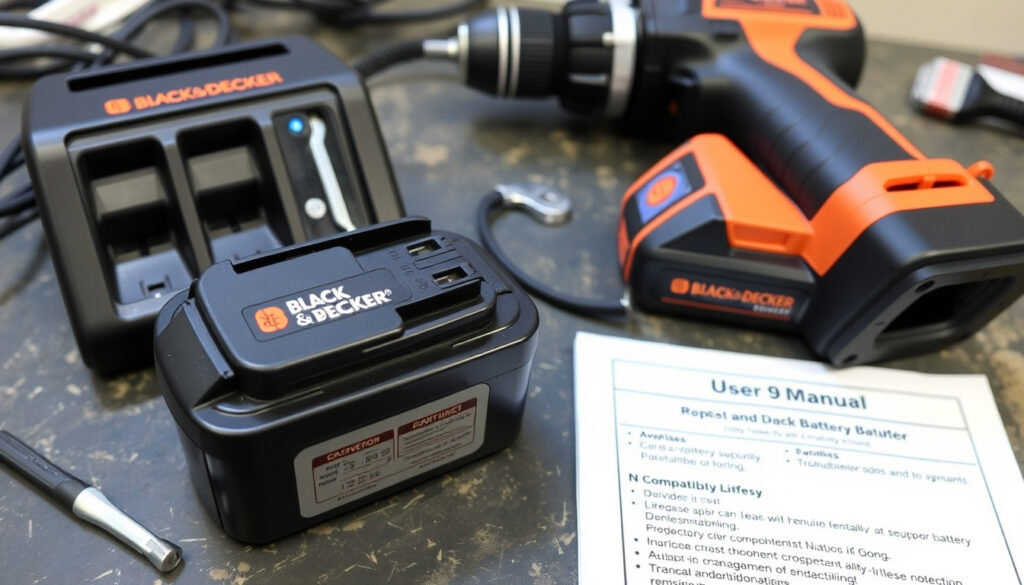
Black and Decker Battery: Compatibility, Lifespan & Troubleshoot
There’s a moment almost every DIYer hits: you reach for a spare battery from an older drill, and it just won’t click into the newer machine, or it powers up but dies faster than expected. If you’re juggling a mix of Black+Decker 18V and 20V MAX tools in your shed or garage in Ireland, you’ve probably wondered whether the batteries are truly interchangeable and how long they’re actually built to last.
Voltage reported: 18V (nominal) vs 20V MAX (marketing label) · Typical usable life: 150–200 full charge cycles (NiCd) · Chemistry common today: Lithium‑ion (Li‑ion) · Warranty on original batteries: 2 years (subject to terms)
The 18V vs 20V MAX naming confusion
Black+Decker’s 20V MAX line was introduced as a marketing refresh of its 18V power tool platform. The “20V MAX” label refers to the maximum voltage the battery can reach at full charge — around 20 volts — while the nominal voltage, which is what the tool actually uses in operation, is 18 volts. That’s why many people assume they’re the same system. In practice, the physical connectors and voltage characteristics are nearly identical, but compatibility still depends on the specific tool and battery generation. Black+Decker’s official FAQ states that batteries are often interchangeable within the same voltage platform, but it doesn’t guarantee cross-generational fit.
The key difference isn’t the voltage itself — it’s the connector design and the battery management electronics. According to Power Tools Adapters, an independent compatibility guide, 18V legacy tools and 20V MAX batteries are not backward compatible without an adapter. That means if you own an older 18V drill and try to slide in a newer 20V MAX battery, it likely won’t fit or won’t function correctly — and forcing it could damage the tool or battery.
Battery compatibility: what fits what
Compatibility questions dominate online searches, and for good reason — getting it wrong can mean a dead tool mid-project or, worse, a shorted battery. Here’s what the available research shows, organised into a clear snapshot.
Key compatibility facts
- Power Tools Adapters states that 18V tools and 20V MAX batteries are not compatible without an adapter.
- Physical connectors and electronics differ between the two generations. (Power Tools Adapters)
- PowerToolsAdapters.fr notes there is no official Black+Decker upgrade that lets 18V batteries run directly on newer tools.
- Adapters exist, but they carry risks and are not endorsed by the manufacturer. (PowerToolsAdapters.fr)
- Garage Almanac says a 20V MAX battery cannot power older 18V or 20V Smart Select NiCd tools.
- Chemistry differences (NiCd vs Li‑ion) add another layer of incompatibility. (Garage Almanac)
The practical takeaway: treat 18V and 20V MAX as distinct systems unless you’ve verified fit with your specific tool model. Just because the numbering looks similar doesn’t mean the connector will click.
Watch out: Forcing a mismatched battery can short the pack or damage the tool’s electronics. Compatibility charts exist for a reason — use them before you push.
To make this clearer, here’s a comparison of the two battery platforms based on the available research:
| Feature | 18V (legacy) | 20V MAX |
|---|---|---|
| Nominal voltage | 18V | 18V (20V max peak) |
| Marketing label | 18V | 20V MAX |
| Typical capacities | 1.5 Ah, 2.0 Ah, 4.0 Ah | 1.5 Ah, 2.0 Ah, 4.0 Ah |
| Common chemistry | NiCd (older), Li‑ion (newer) | Li‑ion |
| Tools that use them | Older Black+Decker 18V tools | Newer 20V MAX tools |
| Cross-compatibility | Not with 20V MAX without adapter | Not with 18V tools without adapter |
The pattern is clear: while both platforms share the same nominal voltage, the physical and electronic design separates them. The implication: for most users, sticking to one platform — or using manufacturer-approved adapters — is the safest route.
What battery is compatible with Black and Decker?
Modern Black+Decker 18V tools use a slide-on battery interface (EPL, HPL, ASL, EGB series). All 18V Li‑ion batteries from the same generation share that connector and are cross-compatible. The official Black+Decker FAQ confirms that batteries are often interchangeable within the same voltage platform. 20V MAX batteries, by contrast, have a different physical shape and terminal arrangement — they won’t slide into an 18V tool without an adapter, and even then function is not guaranteed.
Third-party batteries add another variable. Some aftermarket packs mimic the 18V slide-on interface and claim compatibility, but Power Tools Adapters warns that these may lack proper over-discharge protection. If you buy third-party, match the exact model number listed in your tool’s manual and verify the voltage rating.
Compatibility rule: Within the same voltage class and chemistry (18V Li‑ion with 18V Li‑ion), fit is reliable. Cross-generation or cross-chemistry swaps require a verified adapter — treat any shortcut as a risk.
Are all black and decker 18v batteries the same?
No — and the differences matter. Capacity varies from 1.5 Ah to 4.0 Ah, and that affects runtime, not power. Chemistry splits the line into older NiCd packs (prone to memory effect) and modern Li‑ion (lighter, longer cycle life). Black+Decker’s battery support section distinguishes between lithium‑ion and NiCad lifespan, confirming that the two chemistries behave differently in daily use. All modern Black+Decker 18V Li‑ion batteries share the same slide-on interface and are cross-compatible within the 18V line — but an old NiCd 18V pack may have slightly different terminals and charging requirements than a newer Li‑ion one.
The catch: if you mix a NiCd tool with a Li‑ion battery (or vice versa), the voltage curve and charging profile may not align, causing premature shutdown or reduced runtime. Match the chemistry to what the tool was designed for.
How long do Black+Decker batteries actually last?
Battery lifespan is a mix of chemistry, usage patterns, and how you store them. For NiCd batteries, which are common in older 18V tools, Black+Decker’s support team gives a clear figure: BLACK+DECKER Support states that an 18V NiCd outdoor battery has a useful life of 150–200 full charge cycles under normal household use. That translates to roughly 2–4 years for a typical DIYer who charges and discharges a few times a week.
Lithium‑ion batteries, used in most 20V MAX tools and newer 18V models, typically last longer in terms of calendar age — often 3–5 years — but they degrade faster if you consistently drain them to zero or leave them in extreme heat. Black+Decker’s battery support section distinguishes between lithium‑ion and NiCad lifespan, noting that chemistry affects how long each type holds up. In practice, lithium‑ion batteries handle more partial charge cycles better and don’t suffer the “memory effect” that plagues older NiCd cells.
Key stat — Use this as a benchmark: NiCd batteries deliver 150–200 full charge cycles; Li‑ion typically manages 500+ partial cycles, though calendar ageing limits them to roughly 3–5 years. If your pack can’t hold enough charge to finish a simple drill task, it’s time to replace it.
If you’re buying a battery in Ireland or the EU, remember that the 2-year warranty on original batteries applies, but it’s subject to terms — normal wear and tear isn’t covered, and third-party batteries may not qualify. Why this matters: a cheap third-party battery might save money upfront but could die twice as fast and void your tool warranty.
How do I know if my Black and Decker battery is bad?
Three signals tell you a battery is failing. First, physical signs — swelling, cracks, or leaking fluid mean the pack is unsafe and must be replaced immediately. Second, performance symptoms — a battery that fails to hold charge, runs for only a few minutes, or causes the tool to cut out under light load is likely degraded. Third, you can test with a multimeter: a healthy 18V battery should read about 18–20V when fully charged; a reading below 15V suggests cell failure. Black+Decker’s support team confirms that capacity fade — e.g., a 2.0 Ah pack that now delivers only 1.5 Ah — is a common end-of-life indicator.
The pattern: a bad battery rarely goes silent. It swells, runs short, or reads low voltage. If you see any of these, stop using the pack — a failing Li‑ion battery can be a fire risk.
What the manuals and guides really say
One of the most confusing parts of Black+Decker battery research is that official documentation is sparse, while independent guides fill the gap — with varying reliability. Here’s how the sources stack up:
- Black+Decker Official FAQ (tier 1): confirms interchangeability within same voltage platform, but doesn’t detail cross-generation limits.
- BLACK+DECKER Support (tier 1): gives the 150–200 cycle lifespan figure for NiCd batteries.
- Power Tools Adapters (tier 3): independent guide warning that 18V tools and 20V MAX batteries aren’t compatible without an adapter.
- PowerToolsAdapters.fr (tier 3): French-language guide reinforcing the compatibility warning and noting no official upgrade path exists.
- Garage Almanac (tier 3): states a 20V MAX battery can’t power older 18V or 20V Smart Select NiCd tools.
Notice the pattern: manufacturer sources confirm basic interchangeability within voltage platforms, but independent guides highlight the gaps between generations. That’s because Black+Decker’s own support rarely addresses backwards compatibility directly — possibly to avoid encouraging unsafe adapter use.
The catch: most online advice comes from third-party sellers or hobbyist sites, so treat tier‑3 guidance as directional rather than definitive. Always cross-check with your tool’s manual or contact Black+Decker support directly.
Practical steps for EU and Ireland buyers
Whether you’re upgrading a single tool or building a full kit, a few practical steps can prevent expensive mistakes.
- Check the tool’s model number and manual. Look for the voltage label (18V vs 20V MAX) and the exact battery model recommended.
- Match the chemistry. NiCd tools typically need NiCd or compatible NiMH batteries — Li‑ion packs may not deliver the same current profile.
- Measure your existing battery’s connector. Compare it visually to any replacement you consider.
- If in doubt, buy the battery listed in the tool’s manual — not a “universal” or adapter-based solution.
- Consider the 2-year warranty. Original Black+Decker batteries come with a limited warranty, but third-party packs usually don’t.
For tools that use 20V MAX batteries, the safest upgrade path is to stay within that platform and choose a compatible capacity (1.5 Ah, 2.0 Ah, or 4.0 Ah). Older 18V tools may not accept even a physically similar battery due to internal electronics differences. What to watch: if you see an “adapter” that claims to bridge 18V to 20V MAX, read the fine print — most are generic and not tested by Black+Decker.
18V platform upsides
- Broad compatibility across older Black+Decker tools
- Lower replacement cost for legacy packs
- Slide-on interface shared across most 18V Li‑ion models
20V MAX upsides
- Current platform with active product support
- Li‑ion chemistry standard (no memory effect)
- Wider capacity range up to 4.0 Ah
Downsides to consider
- 18V and 20V MAX are not cross-compatible without an adapter
- Third-party batteries may lack voltage protection
- Warranty only covers original packs; normal wear excluded
| Specification | 18V Li‑ion | 20V MAX Li‑ion |
|---|---|---|
| Nominal voltage | 18V | 18V |
| Peak voltage | ~20V | ~20V |
| Common capacities | 1.5 Ah, 2.0 Ah, 4.0 Ah | 1.5 Ah, 2.0 Ah, 4.0 Ah |
| Battery interface | Slide-on (EPL, HPL, ASL, EGB) | Slide-on (POWERCONNECT) |
| Cycle life (typical) | 300–500 partial cycles | 300–500 partial cycles |
| Warranty | 2 years (original only) | 2 years (original only) |
The implication: sticking to one platform eliminates guesswork. If you own mostly 18V tools, buy 18V Li‑ion replacements. If you’re starting fresh, the 20V MAX line gives you longer manufacturer support and the widest choice of new tools.
Related reading: HP OfficeJet Pro 7740 ink cartridges · remote control cars buying guide
in.blackanddecker.global, blackanddecker.com, ceenr.com, blackanddecker.com, toolcompat.com, blackanddecker.com
Frequently asked questions
What cordless batteries are compatible with each other?
Within the same Black+Decker voltage platform (e.g., 18V to 18V), batteries are often interchangeable, according to the official FAQ. However, 18V and 20V MAX systems are not cross-compatible without an adapter, and even then, physical fit isn’t guaranteed.
Are Black and Decker 18V batteries interchangeable with other brands?
No. Black+Decker 18V batteries are designed for Black+Decker tools only. Other brands (e.g., DeWalt, Ryobi) use different connectors and voltage platforms, so interchangeability is not supported.
Why 20V Max batteries do not fit 18V tools?
The 20V MAX battery has a different connector shape and internal electronics than the older 18V platform. Even though the nominal voltage is the same (18V), the physical housing and electrical contacts differ, preventing a direct fit without an adapter.
Is it safe to leave a Black+Decker battery on the charger overnight?
Most modern Black+Decker chargers include overcharge protection, so leaving a battery on overnight is generally safe. However, for maximum lifespan, it’s better to remove the battery once fully charged, especially with NiCd cells that can heat up if overcharged repeatedly.
How do I know if my Black+Decker battery is 18V or 20V MAX?
Check the label on the battery itself. 18V batteries are marked “18V,” while 20V MAX batteries are labelled “20V MAX” — usually with a black and yellow design. The tool’s manual also lists the compatible battery model.
Can I use a 4.0 Ah battery on a tool that came with a 1.5 Ah?
Yes, if the battery fits physically and is the same voltage platform. Higher Ah (amp-hour) batteries provide longer runtime but don’t increase tool power. Just make sure the battery model is listed as compatible by Black+Decker.
Related reading
- BLACK+DECKER Support — Batteries & Accessories
- Power Tools Adapters — Battery Compatibility Guide
- Garage Almanac — 20V MAX Compatibility
More related posts
 The Handmaid’s Tale Season 6: Release Date & Episode Guide
 1/2 Cup of Butter in Grams: Exact Conversion & Measurement Guide
 How to Pair AirPods to Android: Step-by-Step Guide (2025)
 Best Pick Up Lines: Witty, Smooth & Cheesy That Work
 Lakers vs Golden State Warriors Stats: Curry Out, LeBron 26 Pts
 HP OfficeJet Pro 7740 Ink: Cartridge Numbers & Replacement
 Nick Cave and the Bad Seeds: Biography, Hits & Tragedy