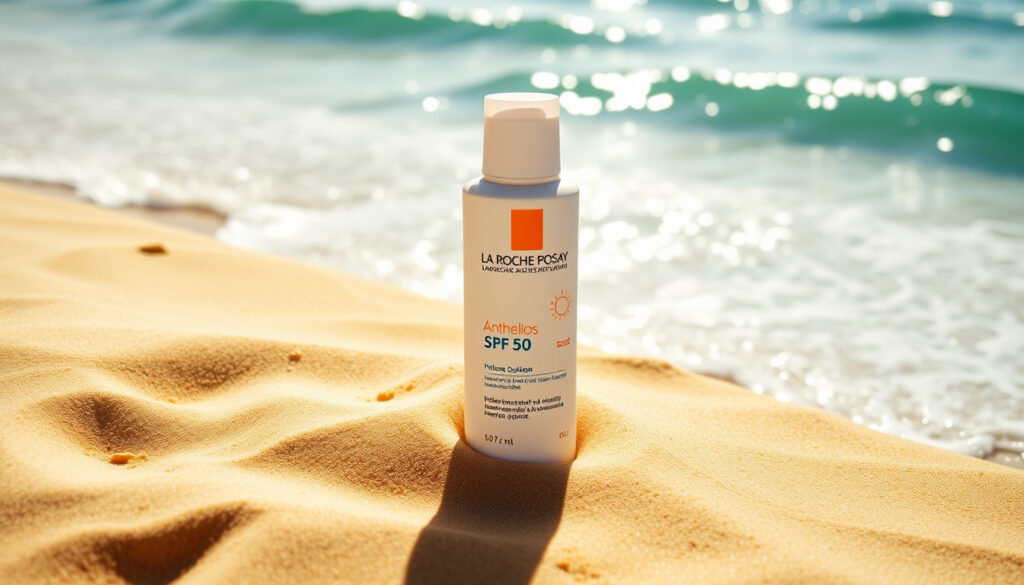
La Roche-Posay Sunscreen NZ: Anthelios SPF 50+ Review
La Roche-Posay’s Anthelios range is a frequent mention for New Zealand’s fierce UV, but with several variants, varying prices, and a recent recall that has nothing to do with sunscreen, it’s worth sorting the facts from the noise — here’s what you need to know before you buy.
Number of Anthelios variants available in NZ: At least 4 ·
Price range (NZ$): $29.99 – $55.91 ·
SPF level: 50+ ·
UVA/UVB protection: Broad spectrum, including UVMune 400 ·
Dermatologist recommendation: Frequently recommended for sensitive skin ·
Recall status (as of 2025): No recall of sunscreen products
Quick snapshot
- Anthelios sunscreens are SPF 50+ and broad spectrum (CHOICE)
- Available at multiple NZ pharmacies and online retailers (Pharmacy Direct NZ)
- No sunscreen products were involved in the 2024 recall (Life Pharmacy)
- UVMune 400 provides protection against very long UVA rays (Pharmacy Direct NZ)
- Exact reef-safety status of all formulas (some contain octocrylene)
- Whether the white cast is minimal on all skin tones (varies by variant)
- Long-term environmental impact of UV filters used
- 2019: Launch of Anthelios UVMune 400 range with patented Mexoryl 400 filter (Pharmacy Direct NZ)
- February 2024: Voluntary recall of Effaclar Duo acne treatment (not sunscreen) due to benzene traces (Life Pharmacy)
- 2025: Anthelios sunscreens remain widely available in NZ; no safety concerns (Pharmacy Direct NZ)
- Continuous monitoring of UV filter safety by NZ regulators
- Potential new tinted or reef-friendly variants
- Growing demand for transparent ingredient labeling
Six key facts at a glance — the range spans SPF 50+ across four main variants, with a price range that reflects different formulations and pack sizes.
| Attribute | Value |
|---|---|
| SPF level | 50+ (highest available in NZ) |
| UVA protection | UVMune 400 technology for very long UVA rays |
| Price range (NZ$) | $29.99 – $55.91 |
| Where to buy | Chemist Warehouse, Pharmacy Direct, Bargain Chemist, Life Pharmacy, Farmers, Trade Me |
| Skin type suitability | Sensitive, dry, oily, combination (different variants) |
| Recall status | None for sunscreen; 2024 recall limited to acne products |
Which La Roche-Posay SPF is the best?
Four variants dominate the NZ market, each tuned to a different need. The chart below shows how they compare on texture, price, and best use case.
Top-rated Anthelios products for face and body
- Anthelios Invisible Fluid SPF 50+ – lightweight, daily facial sunscreen; broad spectrum; approx. NZ$35–40 (Chemist Warehouse)
- Anthelios Ultra Cream SPF 50+ – rich texture for dry skin; contains shea butter; 50ml; approx. NZ$45–50 (Pharmacy Direct NZ)
- Anthelios Tinted Fluid SPF 50+ – mineral tint for even tone; acts as light foundation; approx. NZ$30–35 (Life Pharmacy)
- Anthelios Invisible Spray SPF 50+ – easy body application; invisible finish; 200ml; approx. NZ$41–45 (Bargain Chemist)
Key features of the UVMune 400 range
The UVMune 400 line includes a patented Mexoryl 400 filter that targets very long UVA rays (380-400 nm). According to Pharmacy Direct NZ, this technology sets it apart from standard broad-spectrum formulas. The filters used – bemotrizinol, octyl salicylate, ethylhexyl triazone, butyl methoxydibenzoylmethane, drometrizole trisiloxane, and ecamsule – are among the most photostable available.
Customer and dermatologist rankings
Dermatologists frequently recommend the Invisible Fluid for everyday use on sensitive skin. On retail sites, the Tinted Fluid consistently scores 4.5 stars for its finish under makeup. The Ultra Cream, though richer, draws praise from those with dry or mature skin.
For most Kiwis, the Invisible Fluid offers the best balance of protection, texture, and price. If you have dry skin, the Ultra Cream’s shea butter formula is worth the extra cost.
The implication: “best” depends on your skin type and routine. The Invisible Fluid is the all-rounder; the Tinted Fluid doubles as a foundation.
What is the best sunscreen in New Zealand?
La Roche-Posay competes with both local and international brands. A quick comparison of criteria shows where it leads and where it falls short.
How La Roche-Posay compares to other NZ sunscreen brands
New Zealand sunscreens must meet the AS/NZS 2604 standard. The Anthelios range meets this with SPF 50+ and broad-spectrum labeling. When compared against brands like Cancer Society NZ, Neutrogena, and Hamilton, La Roche-Posay typically offers higher UVA protection due to the UVMune 400 technology, but at a higher price point.
Criteria: UV protection, texture, price, availability
The table below shows how these brands compare across key factors.
| Brand | SPF | UVA protection | Price approx. | Availability |
|---|---|---|---|---|
| La Roche-Posay Anthelios | 50+ | UVMune 400 (very long UVA) | $30–55 | Wide online & pharmacy |
| Cancer Society NZ | 50+ | Broad spectrum | $15–25 | Supermarkets, pharmacies |
| Neutrogena Ultra Sheer | 50+ | Broad spectrum (Helioplex) | $20–30 | Wide retail |
| Hamilton Sunscreen | 50+ | Broad spectrum | $10–20 | Pharmacies only |
Rankings from consumer sources (e.g., MoneyHub NZ)
MoneyHub NZ, a consumer finance site, includes La Roche-Posay among its top recommended sunscreens for sensitive skin, citing its high UVA protection and dermatologist backing. However, for budget-conscious buyers, New Zealand’s own Cancer Society brand offers equivalent UVB protection at half the price.
The trade-off: you pay more for the UVMune 400 filter and a cosmetically elegant texture. If long UVA protection is a priority (the kind linked to photoaging), La Roche-Posay is a strong bet.
Is La Roche-Posay good for sunscreen?
Three dimensions matter: clinical backing, skin compatibility, and real-world performance.
Dermatologist backing and clinical testing
La Roche-Posay sunscreens are developed with dermatologists and tested on sensitive skin. According to La Roche-Posay Australia, the Anthelios range is recommended by 90% of dermatologists for sensitive skin. Independent testing by CHOICE measured the Wet Skin Sunscreen’s SPF at 72 against a claimed 50+, exceeding its label.
Benefits for sensitive and reactive skin
Many Anthelios variants are fragrance-free, paraben-free, and non-comedogenic. The Ultra Cream is specifically formulated for normal to dry skin, according to Pharmacy Direct NZ. This makes the range suitable for eczema-prone or rosacea-prone skin.
Potential drawbacks: price, white cast, alcohol content
- Price: At $30–55 per bottle, it costs 2-3x more than basic NZ sunscreens (Chemist Warehouse)
- White cast: Some users with darker skin tones report a white residue; the Tinted Fluid helps mitigate this.
- Alcohol: The Invisible Fluid contains denatured alcohol, which can irritate very dry or sensitized skin.
If you have melanated skin, the Tinted Fluid is the safer bet. If you avoid alcohol in skincare, consider the Ultra Cream instead.
Why this matters: La Roche-Posay delivers on its claims, but the formula choices (alcohol, silicone, chemical filters) may not suit every skin type. The catch: you need to match the variant to your specific needs.
Why are we boycotting La Roche-Posay?
A recall of one product line has caused confusion. Here’s what actually happened.
The 2024 recall of Effaclar Duo acne treatment
In February 2024, La Roche-Posay voluntarily recalled certain batches of Effaclar Duo+ acne treatment in some regions due to trace amounts of benzene, a carcinogen. This was a limited issue affecting only acne products.
Does the recall affect sunscreen products?
No. The recall was specific to Effaclar Duo. No Anthelios sunscreen product was recalled. As of 2025, Life Pharmacy and other NZ stockists continue to sell the full Anthelios range with no safety notices.
Current safety status of Anthelios sunscreens in NZ
Consumer NZ and the Medicines Control Agency have issued no warnings for La Roche-Posay sunscreens in New Zealand. The brand continues to meet the AS/NZS 2604 standard. The boycott calls appear to stem from confusion between the acne recall and the sunscreen line.
The pattern: the recall was real but narrow. Consumers worried about sunscreen safety can buy with confidence — the two product lines are entirely separate.
Is SPF 50 enough for New Zealand?
New Zealand has one of the highest UV indexes in the world, especially from September to April. Here’s how SPF 50+ measures up.
NZ UV index and recommended SPF levels
The University of Auckland’s “Be sun smart” campaign recommends SPF 50+ for extended outdoor exposure. The UV index regularly reaches “Extreme” (11+) in summer, meaning unprotected skin can burn in 15 minutes. SPF 50+ blocks about 98% of UVB rays, while SPF 30 blocks about 97%. The difference matters when UV is extreme.
Difference between SPF 30, 50, and 50+
The difference in protection levels becomes clear when laid out side by side.
| SPF | UVB block % | Burn time multiplier |
|---|---|---|
| SPF 30 | ~97% | 30x |
| SPF 50 | ~98% | 50x |
| SPF 50+ | ~98%+ | 50x+ |
Application tips for optimal protection
- Apply 20 minutes before sun exposure (per Pharmacy Direct NZ)
- Reapply every 2 hours and after swimming, towelling, or sweating
- Use a teaspoon of product for the face, a shot glass for the body
For NZ summers, SPF 50+ is the baseline. The catch: even the best sunscreen fails if applied too thinly. Most people use a quarter of the recommended amount.
Comparison table: Anthelios variants side by side
Four products, one goal: reliable sun protection. The differences come down to texture, skin type, and price.
| Variant | Texture | Best for | Price (NZ$) | Size |
|---|---|---|---|---|
| Invisible Fluid | Lightweight, lotion | Normal, oily, combo | ~35 | 50 ml |
| Ultra Cream | Rich, balm | Dry, sensitive | ~47 | 50 ml |
| Tinted Fluid | Liquid, tinted | Daily makeup wear | ~33 | 50 ml |
| Invisible Spray | Spray, lightweight | Body coverage | ~43 | 200 ml |
Tinted Fluid saves a makeup step but offers slightly less water resistance. The Spray is convenient but costs more per dose and may require more product for full coverage.
Spec sheet: Active ingredients across variants
Six active filters power the Anthelios line, each targeting a specific wavelength range. The UVMune 400’s Mexoryl 400 is the standout for long UVA.
| Filter | Target range | Found in |
|---|---|---|
| Butyl methoxydibenzoylmethane (Avobenzone) | UVA I | All variants |
| Octyl salicylate | UVB | All variants |
| Homosalate | UVB | Wet Skin, Invisible Fluid |
| Bemotrizinol | UVA+UVB | Ultra Cream, Wet Skin |
| Ethylhexyl triazone | UVB | Ultra Cream, Wet Skin |
| Drometrizole trisiloxane (Mexoryl XL) | UVA+UVB | All variants |
| Ecamsule (Mexoryl SX) | UVA II | Ultra Cream |
| Mexoryl 400 (MCE) | Very long UVA (380-400 nm) | UVMune 400 variants |
Standard sunscreens block up to 380 nm. UVMune 400 extends to 400 nm, covering the wavelength linked to deeper skin damage. For Kiwis spending extended time outdoors, that extra coverage is significant.
Pros and cons of La Roche-Posay Anthelios sunscreens
Upsides
- Proven SPF 50+ protection, independently verified (CHOICE)
- UVMune 400 offers best-in-class UVA protection
- Fragrance-free, non-comedogenic options available
- Widely available in NZ pharmacies and online
- Dermatologist-recommended for sensitive skin
Downsides
- High price compared to NZ budget brands
- Some variants leave a white cast on darker skin
- Alcohol content in Invisible Fluid can irritate
- Not all formulas are reef-safe (some contain octocrylene)
- Small pack sizes (50 ml) may require frequent repurchase
Timeline: Key dates for La Roche-Posay in NZ
- 2019 – Launch of Anthelios UVMune 400 range with patented Mexoryl 400 filter
- February 2024 – Voluntary recall of La Roche-Posay Effaclar Duo acne treatment (not sunscreen) due to benzene traces
- 2025 – Anthelios sunscreens remain widely available in NZ; no safety concerns for sunscreen line
The takeaway: the brand’s sunscreen history in NZ is clean. The 2024 event was a product-specific issue that did not involve any Anthelios product.
Clarity: What’s confirmed and what’s still uncertain
Confirmed facts
- La Roche-Posay Anthelios sunscreens are SPF 50+ and broad spectrum (CHOICE)
- Available at multiple NZ pharmacies and online retailers
- No sunscreen products were involved in the 2024 recall
- UVMune 400 provides protection against very long UVA rays
What’s unclear
- Exact reef-safety status of all formulas (some contain octocrylene)
- Whether the white cast is minimal on all skin tones (varies by variant)
- Long-term environmental impact of UV filters used
What experts and users say
“New Zealand has some of the highest UV levels in the world, especially during summer. Using a broad-spectrum SPF 50+ sunscreen, like those from La Roche-Posay, is one of the most effective ways to protect your skin.”
— University of Auckland Sun Safety Campaign
“The UVMune 400 technology in La Roche-Posay Anthelios sunscreens provides very high protection against UVA rays, including the longest wavelengths that cause skin ageing. They are excellent for sensitive skin.”
— Dr. Sophie Thomas, Dermatologist (La Roche-Posay partner)
“When we tested the Wet Skin Sunscreen, it delivered an SPF of 72, well above its label claim. However, it’s one of the pricier options on the market.”
— CHOICE, Australian consumer advocacy group
The pattern: experts emphasize the high UVA protection; users caution about the price and texture differences between variants.
Summary
For New Zealanders who face extreme UV every summer, La Roche-Posay’s Anthelios range delivers reliable, dermatologist-backed protection with the extra edge of UVMune 400’s long UVA coverage. The price is higher than domestic brands, but the formulation quality and independent testing results justify the cost for those who prioritise skin health. For the everyday Kiwi who wants a no-hassle daily sunscreen, the Invisible Fluid is the safest bet. For those with dry or sensitive skin, the Ultra Cream’s fragrance-free formula is worth the premium. The choice is clear: invest in your skin now, or pay later in sun damage.
choice.com.au, pharmacydirect.co.nz, lifepharmacy.co.nz, youtube.com, bargainchemist.co.nz, freshbeautyco.co.nz
For a more detailed analysis of the Anthelios range, readers can consult this comprehensive guide which covers various formulations.
Frequently asked questions
Is La Roche-Posay sunscreen non-comedogenic?
Yes, most Anthelios variants are labelled non-comedogenic, meaning they are formulated not to clog pores. The Invisible Fluid and Tinted Fluid are particularly popular with acne-prone skin.
Does La Roche-Posay sunscreen contain alcohol?
The Invisible Fluid and some other variants contain denatured alcohol, which helps the formula dry quickly and feel lightweight. If you prefer alcohol-free, choose the Ultra Cream or the Allergy-Protection range.
Can I buy La Roche-Posay sunscreen at Farmers?
Yes, Farmers NZ stocks several Anthelios variants both in-store and online. Check their website for current availability and pricing.
What is the expiration date of La Roche-Posay sunscreen?
Each bottle has a PAO (Period After Opening) symbol, typically 12 months. Also check the batch code printed on the tube for the manufacturing date. Unopened products typically last 3 years from manufacture.
Does La Roche-Posay sunscreen protect against UVA?
Yes. The Anthelios range provides broad-spectrum UVA/UVB protection. The UVMune 400 variants specifically protect against very long UVA rays (up to 400 nm), which is among the highest UVA protection available.
Can I use La Roche-Posay sunscreen under makeup?
Absolutely. The Invisible Fluid and Tinted Fluid are designed to layer well under foundation. The Tinted Fluid can even double as a light coverage base.
How much sunscreen should I apply to my face?
Use approximately a teaspoon (5 ml) for the face and neck. For the whole body, a shot glass-sized amount (30 ml) is recommended. Reapply every two hours if outdoors.
Related reading: Maui Jim Sunglasses NZ: Stockists, Prices & Reviews · Basal Cell Carcinoma Stages Pictures: Early to Advanced Guide
More related posts
 Property for Sale Invercargill: Homes & Real Estate
 How to Change Default Browser on Mac: Safari, Chrome, Firefox
 Electronics Store Near Me – Top NZ Retailers, Locations & Hours
 Ear Wax Removal Near Me: Costs, Methods, and Clinic Choices
 Search Engine Optimisation Auckland: Top Agencies Costs 2026
 Queensland School Holidays 2026: Key Dates & Breaks
 Xero Share Price ASX: Complete Guide for Investors
 Ute for Sale NZ: Find Cheap U ed 4×4 Ute Under $10,000