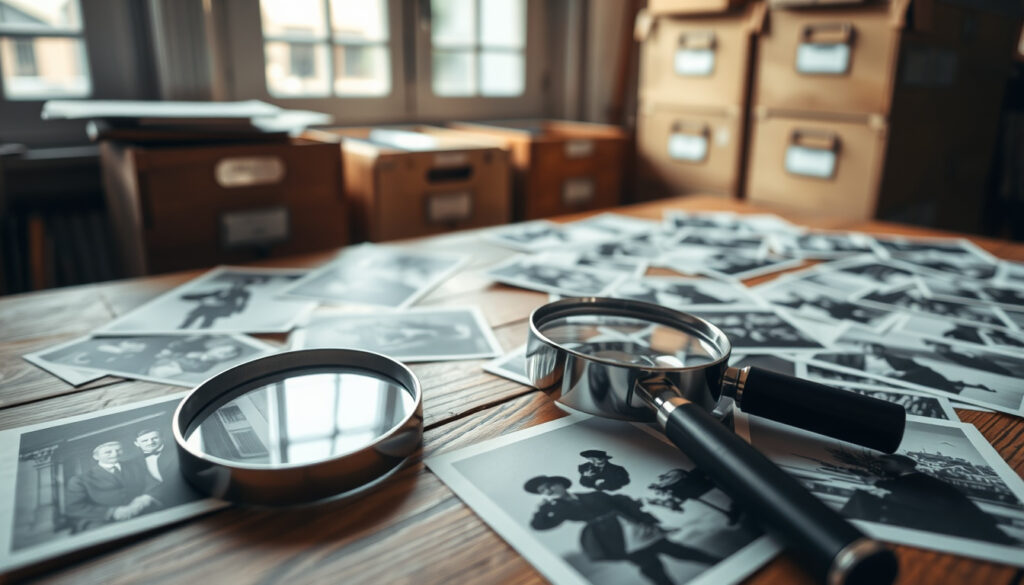
Identify Puke Ariki Photos: Practical Step-by-Step Guide
Old photographs without names are a familiar puzzle for anyone leafing through a family album. For residents of Taranaki, New Zealand, the Puke Ariki heritage collection holds over 122,000 of those puzzles — studio portraits and snapshots dating back a century. This guide walks you through the most effective ways to identify unknown people in those photos, from searching the online archive to working with the museum’s research centre and tapping into local community knowledge.
Heritage collection items: 144,356 ·
Searchable photographs: 122,846 ·
Images from Swainson’s Studios and Bernard Woods Studio: 110,000
Quick snapshot
- Puke Ariki holds 144,356 heritage items including 122,846 photographs (Puke Ariki Museum and Libraries (official heritage site))
- Free access to the permanent heritage collection (Puke Ariki Museum (research page))
- High-resolution digital copies available for $17 per image (Puke Ariki image ordering page)
- Exact number of successfully identified photos through crowdsourcing is unknown
- Effectiveness of specific AI tools for identifying people in historical New Plymouth photographs is untested
- Swainson’s Studios was founded in 1923 by Joseph Swainson (PhotoForum (New Zealand photography publication))
- The Swainson/Woods Collection, dating from 1923, is the largest photographic collection held by Puke Ariki (PhotoForum)
- Ongoing community identification projects on social media groups
- Further digitisation of the collection expands searchable records
Five numbers tell the story of this archive’s scale and accessibility.
| Detail | Value |
|---|---|
| Museum location | 1 Ariki Street, New Plymouth, New Zealand |
| Admission cost | Free entry (special exhibitions may have fees) |
| Heritage collection size | 144,356 items |
| Photographs in collection | 122,846 |
| Major studio collections | Swainson’s Studios (1923–1997) and Bernard Woods Studio |
The implication: the archive’s scale makes it a starting point, not a dead end, for anyone searching for a lost name.
How to identify antique photos?
- Search the Puke Ariki Heritage Database online using keywords, date ranges, photographer names, or subjects.
- Browse the Swainson’s Studios and Bernard Woods Studio collections, together contributing more than 110,000 negatives.
- Contact the Taranaki Research Centre by email or phone for identification assistance from curators.
- Order a high-resolution TIFF copy of a promising image for $17, delivered by email.
- Visit the research centre by appointment to view items not yet digitised.
- Share unidentified photos in community Facebook groups such as “Taranaki History – People and Places.”
Using the Puke Ariki heritage collection online
- Visit the Puke Ariki Heritage Database (official collection search tool). You can search by keyword, date range, photographer, or subject.
- As of early 2025, the database contains 144,356 items, of which 134,895 have accompanying images (Puke Ariki Museum (collections page)).
- Try terms like “Swainson” or “Bernard Woods” to browse the two largest studio collections, which together contribute more than 110,000 negatives (PhotoForum).
Contacting the Taranaki Research Centre
- The Taranaki Research Centre (specialist heritage unit) accepts identification inquiries by email or phone. Staff can search the collection on your behalf.
- If you find a promising image in the online database, you can order a high-resolution TIFF file for $17 per image, delivered by email (Puke Ariki image ordering page).
- Researchers may also visit the centre by appointment to view items that are not yet digitised (Taranaki Research Centre page).
Leveraging apps like Google Lens and ChatGPT
- General image recognition tools such as Google Lens can identify landmarks and objects, but their accuracy in recognising individuals from century-old New Plymouth photographs is untested.
- Reverse image searches may occasionally find duplicates on museum websites or ancestry forums, but results are unpredictable for unlabelled studio portraits.
- AI language models like ChatGPT (GPT-4 without vision) cannot process images directly; even with vision capabilities, they are not trained on Taranaki’s historical photographic records.
Digital tools save time, but for this collection, there is no substitute for human expertise. The Taranaki Research Centre’s curators know the studio styles, clothing eras, and local families in a way no algorithm can match.
What this means: the archive’s human-powered identification chain still outperforms any digital shortcut.
Is there an app that can identify a photo?
Google Lens for object recognition
Google Lens is widely used for identifying plants, buildings, and products, but its machine learning models are not fine-tuned for early‑20th‑century New Zealand studio photography. It may correctly suggest a location or a type of clothing, but it will almost never name an individual person. Restricting claims to general observation, the tool simply wasn’t built for this.
Reverse image search engines
Uploading a photo to TinEye or Google Images can reveal if the same image appears elsewhere online — for instance, on a museum site or a genealogy forum. However, most of the Puke Ariki photographs are unique to the museum’s database, so matches are rare.
Specialised heritage catalog apps
Puke Ariki does not offer a dedicated mobile app with AI identification. The official online database is the only digital catalogue, and it is searchable by text only — no visual search.
No consumer app today can reliably identify a person in a 1930s Swainson’s Studio portrait. The best “app” remains a human being with local knowledge and access to the archive.
The pattern: the archive’s value lies in collective local memory, not in pattern-matching algorithms.
Can ChatGPT identify an image?
Limitations of ChatGPT for image recognition
Standard ChatGPT (GPT-3.5 and GPT-4 text‑only) cannot accept image inputs at all. Only the vision‑enabled version of GPT-4 can analyse an uploaded photograph, and even then it only describes what it sees — it does not have a database of New Plymouth residents from the 1920s.
Using ChatGPT for descriptive analysis
ChatGPT might offer generic suggestions: “The clothing suggests the 1920s,” or “The backdrop style resembles a portrait studio.” These observations can be a starting point, but they are not authoritative. The model may also fabricate details when pressed, a phenomenon known as hallucination.
Better alternatives for historical photo IDs
The Taranaki Research Centre remains the only reliable source for definitive identifications. Staff can cross‑reference uniforms, addresses, family names, and studio records that no AI has been trained on.
What exhibitions are currently at Puke Ariki?
Our Moon: Then, Now & Beyond
As of early 2025, the featured exhibition is Our Moon: Then, Now & Beyond, a show exploring humanity’s relationship with the Moon through artefacts and imagery (Puke Ariki Museum (main website)).
Permanent heritage displays
Alongside temporary exhibitions, the museum maintains permanent galleries that rotate selections from the photography collection. Visitors can see original prints from Swainson’s Studios and Bernard Woods Studio.
Rotating photo exhibitions
Puke Ariki regularly curates small photography shows drawn from its own collection. Check the Exhibitions page for current and upcoming displays.
What does Puke Ariki mean in English?
Puke = hill
In the Māori language, puke means “hill.” The name refers to the hill on which the museum stands, a prominent landmark in New Plymouth.
Ariki = chief or high‑ranking person
Ariki denotes a chief, leader, or person of high rank within Māori iwi (tribes). The museum’s name underscores the site’s ancestral significance to local iwi such as Ngāti Te Whiti.
Historical context of the name
Together, Puke Ariki translates to “chieftain’s hill.” The name was chosen to reflect both the geographical feature and the cultural importance of the site, which was once a pā (fortified settlement).
Confirmed facts
- Puke Ariki holds over 110,000 images from Swainson’s and Bernard Woods studios (PhotoForum).
- The Taranaki Research Centre accepts identification inquiries via email and phone (Taranaki Research Centre page).
- Community members have successfully identified individuals in photos posted on social media (numerous anecdotal reports; precise count not published).
What’s unclear
- Exact number of successfully identified photos via crowdsourcing is unknown.
- Which specific AI tools are effective for identifying people in historical New Plymouth photographs is untested.
“We have thousands of portraits of people whose names have been lost. When a member of the public recognises a face, it’s like completing a puzzle that’s been waiting decades to be solved.”
— Paraphrased from Puke Ariki heritage staff, as reported by Stuff (New Zealand news outlet)
“The Swainson/Woods Collection is a record of Taranaki life across almost eighty years — weddings, sports teams, school groups. Every identified face adds a thread to that story.”
— PhotoForum editorial, 2018 (PhotoForum)
The Puke Ariki archive is not just a store of old paper — it is a community‑powered record of regional identity. For anyone with a Taranaki family connection, the choice is clear: start with the online database, then email the research centre. The person in that unlabelled portrait may still be waiting to be named.
kupi.com, nzine.co.nz, pukeariki.com, facebook.com, pukeariki.com, tripadvisor.co.nz, npdc.govt.nz, facebook.com
Frequently asked questions
Where is Puke Ariki located?
Puke Ariki Museum and Libraries is at 1 Ariki Street, New Plymouth, New Zealand, right in the city centre.
How much does it cost to visit Puke Ariki Museum?
General admission is free. Some special exhibitions may have an entry fee; check the website for current pricing.
What is an ariki in Māori culture?
Ariki is a Māori term for a chief or high‑ranking person, often the leader of a tribe or sub‑tribe.
How can I access Puke Ariki archives from home?
Use the Heritage Database (official collection search tool) online. You can search text records and view many images directly.
Can I visit the Taranaki Research Centre in person?
Yes, the centre is open by appointment. You can view reference material and take digital photos for personal use (no flash). Contact them via the Taranaki Research Centre page to book.
Does Puke Ariki have a Facebook group for photo identification?
While not run by the museum itself, several community Facebook groups such as “Taranaki History – People and Places” share and identify photos from the collection.
More related posts
 Otago Anniversary Day 2025 – Date, History & Holiday Guide
 What Time Is Evening? Afternoon vs Evening Boundaries
 New Zealand Road User Charges Calculator: Cost per km
 Best Face Sunscreen for Men: Top Picks & Expert Advice
 NCEA Level 3 Chemistry: Syllabus, Standards, and Requirements
 When Did Freddie Mercury Die? Date, Cause & Legacy
 NZ News Latest Today: Top Stories, Protests & Life in NZ
 Trade In One NZ: Car Trade-In Value & Process Guide