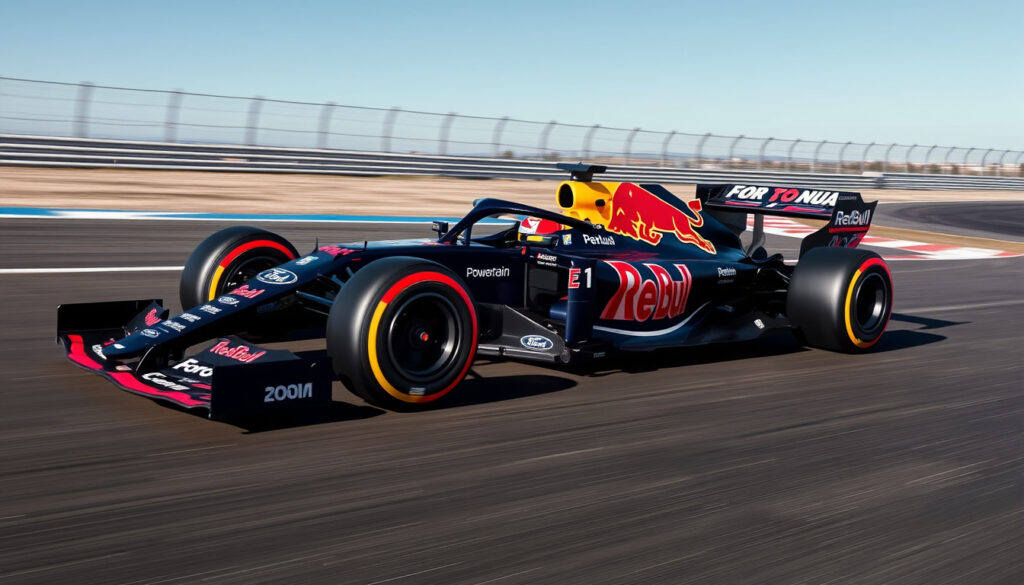
Red Bull Ford 2026 F1 – Powertrains Partnership Explained
Red Bull Ford Powertrains represents one of Formula 1’s most ambitious power unit projects ahead of the 2026 season. The partnership between Red Bull Racing and Ford combines the energy drink company’s growing in-house engineering capability with the American automaker’s century of motorsport experience, creating a new power unit manufacturer that will supply both Red Bull Racing and Racing Bulls starting in March 2026. This collaboration marks Ford’s return to Formula 1 after a two-decade absence, coinciding with sweeping new technical regulations designed to make F1 more sustainable while maintaining competitive performance levels.
The project centres on developing a 1.6-litre V6 turbo-hybrid power unit capable of exceeding 1000 horsepower under completely new technical requirements. Red Bull Ford Powertrains operates from a purpose-built facility in Milton Keynes, United Kingdom, where engineers have been working intensively to ready the power units for competitive debut at the season-opening Grand Prix. The technical challenge is substantial: the 2026 regulations demand that approximately half of total power output come from electrical systems, triple the proportion in current power units, while simultaneously requiring the use of 100% sustainable fuels.
What is Red Bull Ford Powertrains?
Red Bull Ford Powertrains, commonly abbreviated as RBPT, is the dedicated power unit division established by Red Bull Racing to design, develop, and manufacture Formula 1 engines in-house. The organisation traces its origins to 2021, when Red Bull took over Honda’s F1 power unit designs during an FIA-sanctioned development freeze that prevented competitors from continuing their own engine programmes. This arrangement allowed Red Bull to continue using Honda’s power units while building the foundation for complete in-house engine production.
Red Bull + Ford from 2026
Red Bull Ford Powertrains (RBPT)
Red Bull Racing, Racing Bulls
2026–2030
Key developments from the partnership
- Ford’s return to Formula 1 after two decades, first announced in February 2023 for the 2026 season
- RBPT operates from a 465 square metre facility in Milton Keynes, United Kingdom
- Ford engineers are embedded within Red Bull’s operations to support power unit development
- The collaboration extends across multiple racing disciplines including Dakar Rally, WRC, Le Mans, and NASCAR
- RBPT branding appeared on cars during the transition period before the 2026 chassis names
- The project is described internally as both “mammoth” in scope and “unstoppable” in ambition
| Fact | Details |
|---|---|
| Power Unit Supplier | Red Bull Ford Powertrains (RBPT) |
| Headquarters | Milton Keynes, United Kingdom |
| Facility Size | 465 square metres |
| Teams Supplied | Oracle Red Bull Racing, Visa Cash App Racing Bulls |
| Partnership Period | 2026 through 2030 |
| Ford Support Areas | Combustion engines, energy recovery systems, controls, 3D printing, simulation |
| Heritage | Based on Honda designs acquired in 2021 |
| Ford Engineers | Embedded in Milton Keynes facility |
What engines will Red Bull use in 2026 F1?
The power units that Red Bull Ford Powertrains has developed for the 2026 Formula 1 season represent a complete departure from the previous generation of engines. These 1.6-litre V6 turbo-hybrid power units must deliver more than 1000 horsepower under new regulations specifically designed to increase electrical power contribution significantly. Unlike current power units where electrical systems provide roughly one-third of total output, the 2026 specification requires that approximately half of all power comes from the hybrid electrical systems—effectively tripling the electrical output proportion compared to existing units.
Technical specifications and requirements
The 2026 power units face demanding technical requirements beyond raw performance output. Sustainability sits at the core of the new regulations, mandating that all engines run on 100% sustainable fuels that achieve carbon neutrality across their lifecycle. The permitted fuel volume has been reduced substantially, with the new units using less than half the fuel consumed by 2013 power units, placing greater emphasis on thermal efficiency and energy recovery effectiveness.
The 2026 regulations mandate that Formula 1 power units operate on 100% sustainable fuels achieving carbon zero status. This represents a fundamental shift from previous eras when fuel composition was not a regulatory requirement. The reduction to less than half the 2013 fuel volume means efficiency optimisation is critical to maintaining competitive lap times.
Durability requirements have also intensified under the new framework. Teams will be limited to just three power units per car for the entire season, with any failures resulting in grid position penalties at subsequent events. This represents a significant reliability challenge for a project that has not yet experienced competitive Grand Prix conditions, with Ford officials acknowledging that the untested nature of the units at race speed remains a notable risk factor heading into the season.
Ford’s engineering contributions
Ford’s involvement in the Red Bull Ford Powertrains project extends across multiple technical disciplines, bringing manufacturing capabilities and simulation tools developed through the company’s broader motorsport programme. Advanced 3D printing technologies have substantially accelerated component production, reducing manufacturing time from 16 days to just 5 days for certain parts. This capability allows faster iteration cycles during development and enables rapid production of bespoke components for testing and race conditions.
Simulation tools provided by Ford operate at computational speeds 1000 times faster than real-time racing conditions, allowing engineers to model thousands of scenarios before physical testing begins. These digital tools support development of battery energy management strategies, thermal heat dissipation approaches, and oil consumption control systems. Some hardware components are sourced from Aston Martin, though the specific details of these supplier arrangements remain undisclosed by both parties.
The partnership combines intensive simulation work with physical fabrication and calibration activities conducted between facilities in Milton Keynes and Ford sites in Michigan and Detroit. Digital tools for energy deployment optimisation incorporate driver simulator feedback, creating a development loop that connects track engineering data directly with power unit calibration decisions.
Who are the Red Bull F1 drivers for 2026?
Specific driver lineups for both Red Bull Racing and Racing Bulls in the 2026 Formula 1 season remain undisclosed across all available official sources. The available information confirms that Red Bull Ford Powertrains will supply power units to two teams—Oracle Red Bull Racing and Visa Cash App Racing Bulls—but does not include announcements regarding which drivers will pilot those cars. This represents a notable information gap in the partnership’s public documentation, with driver announcements expected closer to the season launch date.
Team structure and operations
Racing Bulls operates from a separate facility near the main Red Bull Racing base, maintaining distinct operations while sharing power unit supply arrangements. The team name underwent changes in recent seasons, transitioning from AlphaTauri to Racing Bulls with the Visa Cash App sponsorship identity, and the 2026 car carries the designation VCARB 03. The separate team structure means Racing Bulls develops its own chassis and aerodynamic package while receiving identical power units from Red Bull Ford Powertrains.
Red Bull Racing, competing under the Oracle Red Bull Racing banner, fields the primary team effort with the RB22 chassis designation. The works team benefits from integrated access to Red Bull Ford Powertrains engineering resources, though both teams operate independently for chassis development. The power unit supply arrangement covers both teams equally, with identical technical specifications and support levels regardless of competitive positioning within the championship.
What is the Red Bull 2026 F1 car name?
The chassis naming conventions for Red Bull’s 2026 Formula 1 entries follow established patterns within the team’s recent history. Red Bull Racing’s 2026 challenger carries the designation RB22, continuing the sequential numbering system the team has used since entering Formula 1. Racing Bulls’ corresponding entry is named VCARB 03, with the designation reflecting the third generation of chassis produced under that team identity following the transition from AlphaTauri branding.
The name “AlphaTauri” does not appear in 2026 Formula 1 contexts. The team is officially referred to as Racing Bulls or Visa Cash App Racing Bulls, operating under the VCARB 03 chassis name. References to AlphaTauri in earlier documentation have been superseded by current branding arrangements.
Both chassis names appeared alongside Red Bull Ford Powertrains branding during the 2026 season launch, with the new power unit identity visible on the cars as part of the transition from previous Honda hardware arrangements. The visual identification of RBPT branding on race cars marks the first occasion where Red Bull has raced with fully in-house developed power units bearing its own manufacturer identity.
Partnership timeline and key milestones
The Red Bull Ford Powertrains partnership developed across several distinct phases, beginning with Red Bull’s establishment of its own power unit division and culminating in the March 2026 competitive debut. Understanding this chronology provides context for the scale of achievement represented by the project’s readiness for Formula 1 competition.
- 2021 — Red Bull establishes Red Bull Ford Powertrains following takeover of Honda power unit designs during the FIA development freeze, allowing racing operations to continue while building toward independent engine manufacturing capability
- February 2023 — Official announcement of the Ford Racing partnership for 2026 power unit development, marking Ford’s confirmed return to Formula 1 after the manufacturer departed the sport following the 2004 season
- 2023–2025 — Intensive development period encompassing hardware engineering, simulation work, and real-time refinement conducted across facilities in Milton Keynes and Ford locations in Michigan and Detroit, including digital tools for energy deployment and driver simulator feedback integration
- March 2026 — Competitive debut of Red Bull Ford Powertrains units at the Formula 1 season opener, representing the first race-ready in-house power units for Red Bull Racing
The collaboration’s scope extends substantially beyond Formula 1, encompassing participation across Dakar Rally, World Rally Championship with the M-Sport Ford Puma, Le Mans endurance racing, NASCAR series, and Ford SuperVan events. This breadth of involvement reflects Ford’s broader motorsport strategy, which views Formula 1 power unit development as transferable knowledge across its racing programmes worldwide.
What is confirmed versus uncertain for 2026?
Established information
- Red Bull Ford Powertrains supplies both Red Bull Racing and Racing Bulls from March 2026
- The partnership runs from 2026 through 2030
- Power units are 1.6-litre V6 turbo-hybrid designs exceeding 1000 horsepower
- Approximately 50% of power comes from electrical systems
- Units operate on 100% sustainable carbon-neutral fuels
- Three power units permitted per car per season
- RBPT facility operates from 465 square metres in Milton Keynes
- Ford provides 3D printing, simulation, battery management, and thermal engineering support
- Chassis names are RB22 for Red Bull Racing and VCARB 03 for Racing Bulls
Information that remains unclear
- Confirmed driver lineups for both Red Bull Racing and Racing Bulls
- Specific details of Aston Martin-sourced components
- Physical testing results or lap time data from pre-season track running
- Comparative performance assessments against rival power unit manufacturers
- Specific reliability track record from competitive conditions
- Exact split of development responsibilities between Red Bull and Ford engineers
The significance of Ford’s Formula 1 return
Ford’s decision to return to Formula 1 in partnership with Red Bull represents the American manufacturer’s most substantial motorsport commitment in over two decades. The company departed Formula 1 following the 2004 season after its Jaguar Racing operation was sold to Red Bull, and the intervening years saw Ford focus its motorsport efforts on endurance racing, rally competition, and NASCAR involvement. The 2026 partnership marks a strategic repositioning that places Formula 1 at the centre of Ford’s global motorsport communication strategy.
The technical collaboration brings together Ford’s manufacturing scale and simulation capabilities with Red Bull’s trackside engineering expertise and rapid development culture. Ford engineers work embedded within Red Bull’s Milton Keynes facility, creating an integrated working environment rather than a traditional customer-supplier arrangement. This depth of integration reflects both parties’ recognition that the complexity of 2026 power unit regulations demands closer cooperation than conventional engine supply relationships.
The project merges Ford’s century of motorsport experience with Red Bull’s agility and technical ambition, creating conditions for breakthrough innovation in sustainable high-performance propulsion.
Sources across both organisations describe the project in ambitious terms, with Formula 1’s official communications referencing the effort as “mammoth” in scope and potentially “unstoppable” in competitive impact. A documentary production released in March 2026 captures the four-year journey from partnership announcement to competitive debut, documenting the challenges and achievements of establishing a new Formula 1 power unit manufacturer from the ground up.
Summary
Red Bull Ford Powertrains represents a transformative development for both Formula 1 and the Red Bull Racing organisation, marking the energy drink company’s evolution from engine customer to in-house manufacturer through a strategic partnership with returning heavyweight Ford. The 1.6-litre V6 turbo-hybrid power units developed for 2026 combine demanding performance targets exceeding 1000 horsepower with revolutionary sustainability requirements through 100% sustainable fuel utilisation. Both Red Bull Racing with the RB22 and Racing Bulls with the VCARB 03 will utilise these power units from the March season opener, though specific driver lineups remain to be confirmed. The project’s significance extends across multiple racing disciplines where Ford maintains involvement, while the untested nature of competitive reliability represents the primary risk factor as the partnership prepares for its Grand Prix debut. For those exploring career opportunities in New Zealand’s transport sector, the Truck Driver Jobs Auckland listings demonstrate the diverse employment landscape beyond professional motorsport.
Frequently Asked Questions
What power units will Red Bull use in 2026 Formula 1?
Red Bull will use 1.6-litre V6 turbo-hybrid power units developed by Red Bull Ford Powertrains, capable of producing over 1000 horsepower with approximately 50% of power from electrical systems.
When did Ford and Red Bull announce their Formula 1 partnership?
The official Ford Racing partnership with Red Bull was announced in February 2023, confirming collaboration on 2026 power unit development. Red Bull had previously established its own powertrain division in 2021.
Which teams receive Red Bull Ford Powertrains engines?
Both Oracle Red Bull Racing and Visa Cash App Racing Bulls receive Red Bull Ford Powertrains engines, with the RB22 and VCARB 03 chassis respectively running the new power units from March 2026.
How long is the Ford and Red Bull partnership?
The Red Bull Ford Powertrains partnership runs from the 2026 Formula 1 season through 2030, representing a five-year commitment under the new technical regulations.
What is the Red Bull 2026 F1 car called?
Red Bull Racing’s 2026 Formula 1 car is called the RB22, while Racing Bulls’ entry carries the designation VCARB 03. Neither chassis name uses the AlphaTauri identity from previous seasons.
Where is Red Bull Ford Powertrains located?
Red Bull Ford Powertrains operates from a 465 square metre facility in Milton Keynes, United Kingdom. Ford engineers are embedded within this operation alongside Red Bull staff.
What fuel requirements apply to 2026 F1 power units?
All 2026 Formula 1 power units must run on 100% sustainable fuels that achieve carbon neutrality. The permitted fuel volume is less than half what was used in 2013, emphasising efficiency over consumption.
How many power units can teams use in 2026?
Each car is limited to three power units for the entire 2026 Formula 1 season. Exceeding this allocation or experiencing failures results in grid position penalties at subsequent events.
Has Ford previously participated in Formula 1?
Ford last competed in Formula 1 following the 2004 season through its Jaguar Racing operation before selling the team to Red Bull. The 2026 partnership marks Ford’s return after a twenty-year absence from the sport.
What other racing series does the Ford and Red Bull collaboration cover?
Beyond Formula 1, the collaboration encompasses Dakar Rally, World Rally Championship with the M-Sport Ford Puma, Le Mans endurance racing, NASCAR series, and Ford SuperVan events.
More related posts
 Best Fish and Chips Near Me: Dublin & Cork Picks
 Margaret Stoddart Retirement Village – Christchurch Care Guide
 Auckland Police Western Springs College Incident 2026
 Translate English to Hindi: Top Free Tools & Step-by-Step Guide
 Cheapest Unlimited Broadband NZ 2026: Plans Under $70
 Buy Now Pay Later Ireland: No Credit Check & Instant Approval
 Singapore Airlines Premium Economy: Is It Worth the Upgrade