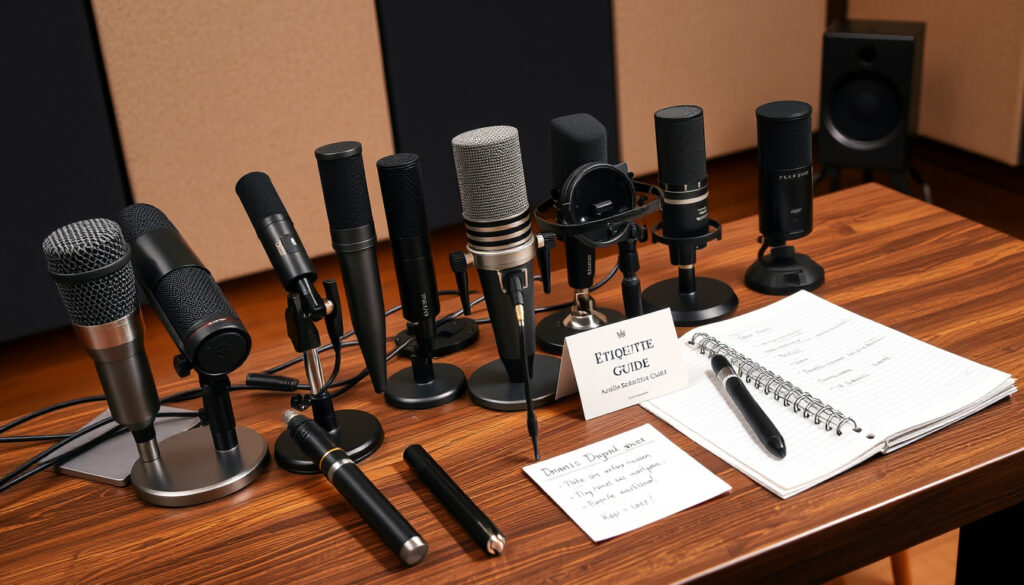
How to Choose a Microphone: Types, Rules & Etiquette Guide
Choosing a microphone can feel like learning a new language — between polar patterns, phantom power, and the condenser-versus-dynamic debate, it’s easy to get lost. Experts at AVerMedia (tech accessories brand) boil it down to three key factors: connection type, polar pattern, and microphone type. Whether you’re recording vocals, hosting a podcast, or trying to sound clear on a video call, this guide will help you pick the right mic without the jargon.
Phantom power requirement: 48 V ·
3:1 rule ratio: 3 : 1 ·
Vocal mic factors to consider: 15 points ·
Supercardioid pickup angle: 115°
Quick snapshot
- Dynamic mics handle high SPL, no phantom power (AVerMedia)
- Condenser mics need 48 V phantom power (AKG (audio equipment manufacturer))
- 3:1 rule reduces phase cancellation (Quickchannel (livestreaming platform))
- “Best” mic for a singer is subjective — no universal formula
- Exact frequency response curves vary by model and use case
- Phantom power compatibility may differ between USB interfaces
- Dynamic and condenser designs have been industry standards since the mid‑20th century (AKG (audio equipment manufacturer))
- USB mics continue to grow for home studios and streaming (AVerMedia)
Four technical specs define most microphone choices:
| Specification | Typical value |
|---|---|
| Most common polar pattern | Cardioid |
| Typical impedance | 150 ohms |
| Frequency response range | 20 Hz – 20 kHz |
| Phantom power voltage | 48 V |
Source: AKG (audio equipment manufacturer)
How to pick a good microphone?
- Identify your primary use case — singing, podcasting, gaming, or video calls.
- Determine your budget — from $50 to over $1,000.
- Understand polar patterns — cardioid, omnidirectional, figure‑8, supercardioid, hypercardioid.
- Check connectivity and compatibility — USB for simplicity, XLR for fidelity.
Identify your primary use case
- For singing: condenser mic with cardioid pattern and pop filter (AKG (audio equipment manufacturer)).
- For podcasting: dynamic or USB mic with neutral frequency response.
- For gaming: USB condenser or dynamic with mute button and noise cancelling.
- For work video calls: plug-and-play USB mic, omnidirectional or cardioid, compact design.
Determine your budget
Microphones range from $50 to over $1,000. AKG (audio equipment manufacturer) recommends starting with a budget and what you plan to record. A $100 dynamic mic can outperform a $300 condenser in a noisy room.
Understand polar patterns
- Cardioid: picks up sound from the front, rejects sides and rear – ideal for solo vocals.
- Omnidirectional: captures sound evenly from all directions – best for ambient recording or roundtables.
- Figure‑8 (bidirectional): sensitive front and back, rejects sides – great for duets.
- Supercardioid (115° pickup) and hypercardioid (105° pickup) offer even tighter focus (AKG (audio equipment manufacturer)).
Check connectivity and compatibility
- USB mics: plug-and-play, no extra gear needed (AVerMedia (tech accessories brand)).
- XLR mics: require an audio interface or mixer, but offer professional audio quality.
The pattern: use case and environment should drive the decision, not price alone.
What type of microphone should I get?
Dynamic microphones
- Rugged, handle very high SPL (e.g., guitar amps, drums).
- No phantom power needed – just plug and go.
- Ideal for live sound and outdoor use (AKG (audio equipment manufacturer)).
Condenser microphones
- Sensitive, capture subtle detail – perfect for studio vocals, acoustic instruments.
- Require 48 V phantom power.
- Better frequency response and transient response (AVerMedia (tech accessories brand)).
Ribbon microphones
- Delicate, produce a warm vintage sound.
- Fragile – not for high SPL sources.
- Typically used in studio settings.
USB vs analog (XLR)
Quickchannel (livestreaming platform) notes that USB mics are the simplest entry point, while XLR mics offer upgradability through mixers and preamps.
USB gives you instant results; XLR gives you room to grow. If you’re building a home studio, start with one good XLR mic and a simple audio interface.
What this means: your long‑term ambitions determine which connector to choose.
Which mic is better, condenser or dynamic?
Four key differences separate these two workhorses:
| Attribute | Condenser | Dynamic |
|---|---|---|
| Sensitivity | High (captures nuance) | Lower (forgives noise) |
| Phantom power needed | Yes (48 V) | No |
| Best for | Vocals, acoustic instruments, studio | Live vocals, drums, guitar amps |
| Durability | Fragile | Very rugged |
Source: AKG (audio equipment manufacturer), AVerMedia (tech accessories brand)
Upsides
- Condenser: exceptional detail for vocals and quiet sources
- Dynamic: works in loud, untreated rooms
- Dynamic: no extra power supply needed
Downsides
- Condenser: picks up room echo, requires phantom power
- Dynamic: less sensitivity for quiet sources
- Dynamic: heavier sound, less high-end sparkle
Source: Shure (professional audio brand)
The implication: choose condenser for nuance in a quiet room, dynamic for rejection in a noisy one.
What is the 3 to 1 rule in micing?
Definition of the 3:1 rule
The 3:1 rule states that the distance between two microphones should be at least three times the distance from each mic to its sound source. Quickchannel (livestreaming platform) explains it as a practical guideline to avoid phase issues.
Why it reduces phase cancellation
When two mics pick up the same sound at slightly different times, the waveforms can cancel each other out – called comb filtering. The 3:1 ratio ensures the delayed sound is quiet enough to be inaudible (Shure (professional audio brand)).
For podcasters recording two people at one table, ignoring the 3:1 rule means muddy, hollow audio that can’t be fixed in post.
Practical application
- If a singer is 6 inches from her mic, the second mic should be at least 18 inches away.
- Common in live sound and multi‑mic recording setups.
The catch: the rule is a guideline – room reflections can still cause issues even with proper spacing.
What is microphone etiquette?
Proper positioning and distance
Shure (professional audio brand) advises presenters to adjust the mic height so it aims at the head, not the chest or shoulder. Keep the mic 2–6 inches from your mouth for best sound.
Handling noise and pop filters
- Use a pop filter to reduce plosives (“p” and “b” sounds).
- Never tap or blow into a mic to test it – speak normally.
Speaking technique
Stay in front of the microphone. Avoid walking away while speaking, which causes drastic level changes (Shure (professional audio brand)).
Avoiding feedback in live settings
In live sound, maintain distance from speakers and use a directional polar pattern (cardioid or hypercardioid) to reject sound from the monitors.
Even the best microphone sounds terrible if you treat it like a prop. Shure’s biggest tip: stay still and speak clearly into the capsule.
What this means: microphone technique matters as much as the gear itself.
Confirmed facts and open questions
Confirmed facts
- Condenser mics need phantom power (AKG (audio equipment manufacturer))
- The 3:1 rule reduces phase cancellation (Quickchannel (livestreaming platform))
- Dynamic mics handle high SPL without distortion (AVerMedia (tech accessories brand))
What’s unclear
- Best microphone for a specific vocalist remains subjective
- Exact frequency response curves vary by model and environment
- Phantom power compatibility may differ between USB interfaces
Expert perspectives
The number‑one factor in choosing a microphone is sound quality. After that, consider what you’re recording and where.
AKG (audio equipment manufacturer)
Dynamic microphones are the default for live situations; condensers are for recording. But very loud sounds may call for dynamics even in the studio.
AKG (audio equipment manufacturer)
Position the microphone so it points at the head, not the chest or shoulder. And stay in front of it — don’t walk away while speaking.
Shure (professional audio brand)
USB microphones are easy to set up and compatible with smart devices, making them suitable for beginners and on‑the‑go recording.
AVerMedia (tech accessories brand)
For a podcaster recording in a spare bedroom, a dynamic USB mic with cardioid pattern is the smartest $80 investment. A singer in a treated home studio will get more mileage from a condenser XLR mic with an interface. The choice isn’t about which technology is “better” — it’s about matching the tool to your room, your voice, and your workflow.
Anyone who buys a microphone in 2025 without considering use case, the 3:1 rule, and a pop filter risks sounding like they’re recording in a wind tunnel.
tctecinnovation.com, sweetwater.com, youtube.com, youtube.com
Frequently asked questions
What is a condenser microphone?
A condenser microphone uses a capacitor to convert sound into an electrical signal. It requires phantom power (48 V) and is highly sensitive, making it ideal for capturing vocals and acoustic instruments in a controlled studio environment (AKG (audio equipment manufacturer)).
Do I need an audio interface for a USB microphone?
No — USB microphones have a built‑in analog‑to‑digital converter and plug directly into your computer. No audio interface is needed (AVerMedia (tech accessories brand)).
How do I set up a microphone on Windows 10?
For a USB mic, simply plug it in. Windows 10 should recognise it as an audio input device. For an XLR mic, you’ll need an audio interface connected via USB. Then in Settings > System > Sound, choose the mic as your input device.
What is the best microphone for podcasting?
There’s no single best, but a dynamic USB mic (e.g., Shure MV7, Rode PodMic) is a popular choice because it rejects room noise and doesn’t require extra gear. Quickchannel (livestreaming platform) recommends testing the mic in your actual recording environment before buying.
Can I use a dynamic microphone for singing?
Absolutely. Dynamic mics like the Shure SM58 are classics for live vocals and can work well for recorded singing, especially in untreated rooms or for loud, forceful voices.
How to reduce background noise in a microphone?
Use a directional polar pattern (cardioid or hypercardioid), position the mic close to your mouth (2–6 inches), and add a pop filter. For persistent noise, consider a dynamic mic, which is less sensitive than a condenser (Shure (professional audio brand)).
What is phantom power and do I need it?
Phantom power is +48 V DC sent from a mixer or audio interface to power condenser microphones. You need it if you use a condenser mic, but not for dynamic or ribbon mics (AKG (audio equipment manufacturer)).
What is the difference between XLR and USB microphones?
XLR mics use a balanced analog connection and require an audio interface or mixer. USB mics are all‑in‑one devices that connect directly to a computer. XLR offers upgradability and better long‑term audio quality; USB offers simplicity (AVerMedia (tech accessories brand)).
Related reading
- Asus ROG Zephyrus G14 Review – a laptop buying guide for audio‑production setups.
- Noel Leeming Trade In Guide – how to trade in electronics before buying a new microphone.
More related posts
 Queensland School Holidays 2026: Key Dates & Breaks
 The Warehouse Group Careers: Jobs, Pay & Interview Tips
 Gas Cylinder Cabinet NZ: Sizes, Prices & Safety Guide
 Tilt Garage Door Openers: Cost, Brands, Lifespan & Automation
 2025 NZ Golf Open: Dates, Venue, Prize Money & Winner
 S&P 500 Compare: Performance vs Alternatives
 Samsung Stick Vacuum NZ: Best Models, Reviews & Prices