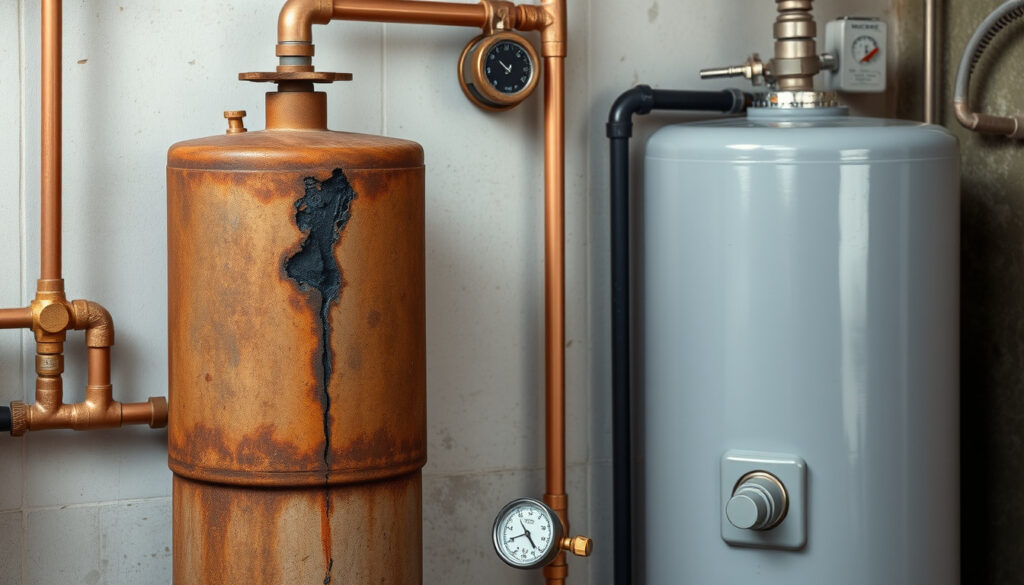
Hot Water Cylinder Replacement: Costs, Signs & Lifespan Guide
Few things interrupt a morning routine faster than a cold shower. If your hot water cylinder is acting up, you’re probably wondering whether it’s time for a replacement — and how much that will set you back. Most cylinders last 10 to 15 years, and swapping an old one can cut your heating bills by up to 25% annually.
Average replacement cost (including installation): €900 – €2,000+ ·
Typical life expectancy: 10–15 years ·
Potential energy savings after replacement: Up to 25% annually ·
Plumber labor cost (typical): €200 – €500
Quick snapshot
- Cylinder unit: €700–€1,500 (Tanks.ie (Irish plumbing retailer))
- Installation labor: €200–€500 (NRM Plumbing and Heating (Dublin plumber))
- Total: €900–€2,000+ (VAT included) (Tanks.ie (Irish plumbing retailer))
- Unvented cylinders cost 20–30% more (Tanks.ie (Irish plumbing retailer))
- 10–15 years typical (24HourPlumber.ie (Irish emergency plumber))
- Copper cylinders: 15–20 years with maintenance (Stillorgan Gas (gas & plumbing service))
- Unvented: 15+ years (24HourPlumber.ie (Irish emergency plumber))
- After 10 years, watch for signs (24HourPlumber.ie (Irish emergency plumber))
- Leaks or rust
- Inconsistent water temperature
- Unusual noises
- Age over 15 years
- Energy savings up to 25% (Gasworks.ie (Dublin gas & plumbing))
- Improved safety with modern controls (Gasworks.ie (Dublin gas & plumbing))
- Better insulation reduces heat loss (Gasworks.ie (Dublin gas & plumbing))
- Peace of mind with new warranty (Gasworks.ie (Dublin gas & plumbing))
The table below collates the core figures every homeowner needs before making a decision.
| Metric | Value |
|---|---|
| Average total cost (Ireland, 2025) | €900 – €2,000+ (VAT included) |
| Typical lifespan | 10–15 years |
| Energy cost reduction | Up to 25% annually |
| Common signs of replacement | 10 indicators including leaks, noise, age |
| Plumber labor cost range | €200 – €500 |
These numbers come from multiple Irish plumbing firms and align across the board — a rare consensus in home maintenance pricing.
How much should it cost to replace a hot water cylinder?
Replacement costs depend on cylinder type, size, and your location. In Ireland, a standard swap runs between €900 and €2,000 including the cylinder and installation, according to NRM Plumbing and Heating (Dublin plumbers). The cylinder itself typically costs €700–€1,500, and labour adds €200–€500.
How much does an unvented hot water cylinder cost?
Unvented cylinders are more expensive — expect €1,200–€2,500 for the cylinder and installation. They require a professional with a specialised qualification, which pushes up labour. Tanks.ie (Irish plumbing supplier) says unvented cylinders cost 20–30% more than vented equivalents.
How much does it cost to replace a hot water cylinder in Ireland?
Irish homeowners face the €900–€2,000 range, but the exact figure varies. Smaller cylinders are quicker to drain and replace, while twin-coil or indirect cylinders take longer and cost more, as Tanks.ie notes. A 300‑litre cylinder, popular for larger homes, runs around €1,500–€2,000 installed.
How much does a plumber charge to replace a hot water cylinder?
Plumbers typically charge €200–€500 for labour. Emergency call‑out fees or complex conversions — such as replacing a combi boiler with an indirect cylinder — can push that higher, Tanks.ie warns.
How much is a new hot water cylinder installed?
All-in prices range from about €900 for a basic direct cylinder swap to over €2,000 for an unvented or large‑capacity unit. NRM Plumbing and Heating includes VAT in its quotes, so get a breakdown before committing.
Irish homeowners should budget €1,200–€1,800 for a typical cylinder replacement. The biggest variable is not the cylinder itself — it’s the labour and any extra pipework needed for unvented or converted systems.
Source: 24HourPlumber.ie (emergency plumbing guide) confirms the €500–€1,500 range for cylinder and labour.
What is the life expectancy of a hot water cylinder?
Manufacturers and plumbers agree: most cylinders last 10–15 years. 24HourPlumber.ie (Irish emergency plumber) says that approaching the 10‑year mark signals “replacement candidate.” Copper cylinders can stretch to 15–20 years with good maintenance, while unvented units often last 15+ years, per Tanks.ie.
How to tell if a hot water cylinder needs replacing?
Stillorgan Gas (Dublin gas & plumbing) lists 10 clear signs that point to replacement. Here’s the checklist:
Top 10 signs your hot water cylinder needs replacing
- Visible leaks or water pooling around the base
- Rust or corrosion on the cylinder body or pipe fittings
- Inconsistent water temperature (hot then cold spikes)
- Rusty or discoloured water from taps
- Unusual noises: banging, popping, or rumbling
- Burst or leaking pressure relief valve
- Cylinder older than 15 years
- Higher energy bills (old cylinders lose heat faster)
- Reduced hot water — not lasting through a shower
- Frequent repairs (call‑outs every few months)
Source: NRM Plumbing and Heating also cites age, inconsistent temperature, noises, and declining water quality as key warnings.
Should I replace or repair my hot water cylinder?
This decision comes down to age and cost of repair. 24HourPlumber.ie suggests that once a cylinder is past 10 years, replacement usually makes more financial sense. A minor leak or faulty thermostat can be fixed, but a corroded cylinder body is not worth patching.
When replacement is better
- Cylinder older than 10 years
- Repair cost more than 50% of replacement cost
- Visible corrosion or rust
- Poor energy efficiency
When repair might suffice
- Cylinder under 8 years old
- Component failure only (thermostat, element, valve)
- Leaking joint that can be tightened
Repairing a 5‑year‑old cylinder with a faulty thermostat costs about €150–€200. Replacing the same cylinder would cost €1,200. Wait until it’s over 10 years and the repair vs. replacement calculus flips sharply in favour of the new unit.
The pattern: age is the decisive factor — below 8 years repair, above 10 replace, and the 8–10 window depends on repair cost severity.
What are the benefits of replacing a hot water cylinder?
A new cylinder isn’t just about avoiding cold showers — it brings real financial and safety gains. Gasworks.ie (Dublin gas & plumbing) says replacement can cut annual hot water fuel costs by up to 25%.
Energy savings
Modern cylinders have better insulation — some with foam jackets that reduce standby heat loss by 30% compared to 20‑year‑old models. That directly lowers your gas or electric bill.
Reliability and safety
Newer units include improved thermostats, pressure relief valves, and corrosion‑resistant materials. Tanks.ie stresses that installation by a qualified professional is critical for safety.
Increased hot water capacity
If your family has grown or you’ve added a bathroom, upsizing from a 150‑litre to a 300‑litre cylinder can end the “who used all the hot water?” arguments. NRM Plumbing and Heating notes that many replacements involve moving to a larger capacity.
Upsides
- Lower energy bills (up to 25% savings)
- Reliable hot water supply
- Modern safety features
- Peace of mind with warranty
Downsides
- High upfront cost (€900–€2,000+)
- Requires qualified plumber
- May need pipework modifications
- Disruption during installation (4–6 hours)
What this means: the energy savings alone can offset the upfront cost within 4–6 years, making replacement a sound medium-term investment.
Timeline: from new cylinder to end of life
The typical journey of a hot water cylinder, according to industry data compiled by Tanks.ie and NRM Plumbing and Heating:
- Year 0 — A new hot water cylinder is installed.
- Year 7–10 — Begin regular inspection for leaks, rust, and temperature consistency.
- Year 10–15 — Most cylinders reach end of life; monitor for failure signs and plan replacement.
- Year 12–15 — Replacement recommended to avoid unexpected failure and improve efficiency.
Irish homes that wait until the cylinder bursts often face additional costs: floor drying, dehumidifiers, and possibly minor flooding damage. Replace proactively between years 12 and 15 to avoid this.
The catch: early replacement captures energy savings sooner and eliminates the risk of an emergency call-out, which itself can cost €200–€500 extra.
What we know — and what’s still unclear
Research on hot water cylinder replacement comes mostly from plumbing companies and online forums, not official bodies. Here’s what the sources agree on and where the picture is fuzzy.
Confirmed facts
- Cost range of €900–€2,000 is cited by multiple plumbing sources in Ireland.
- Life expectancy of 10–15 years is consistent across industry estimates.
- At least 10 identifiable signs indicate need for replacement.
What’s unclear
- Exact regional cost variance (e.g., Dublin vs. rural Ireland) without specific quotes.
- Impact of DIY vs professional replacement on long-term reliability.
- Energy savings percentage may vary based on usage and cylinder quality.
The implication: treat all estimates as directional — always get at least three quotes before deciding.
What Irish homeowners are saying
“If you ask me, €1,400 is a bit much for a straight cylinder swap with insulated copper. I’d shop around.” — Reddit user (r/ireland)
“Replacing your hot water cylinder can mean a saving of up to 25% on annual hot water fuel expenses.” — Gasworks.ie
Gasworks.ie (Dublin gas & plumbing)
“Total Typical Cost: The complete replacement and repair service will cost between €900 and €2,000+ with VAT included.” — NRM Plumbing & Heating (Dublin)
NRM Plumbing and Heating (Dublin plumbers)
“We will highlight 10 clear signs that it’s time to replace your hot water cylinder. These signs include leaks, inconsistent water temperatures and unusual noises.” — Stillorgan Gas
Stillorgan Gas (Dublin gas & plumbing)
Four different sources — from a Reddit user to three Irish plumbing companies — all converge on the same message: know the signs, check the age, and don’t delay replacement if it’s past 12 years.
dublinplumber24hrs.ie, statewaterheaters.com, mybuildingsupplies.ie
Frequently asked questions
How often should I service my hot water cylinder?
Annual inspection by a qualified plumber is recommended. Check the pressure relief valve and look for leaks.
What is the difference between vented and unvented cylinders?
A vented cylinder relies on a cold-water tank in the attic and uses gravity to supply water. An unvented cylinder is pressurised directly from the mains and needs a qualified installer. Unvented cylinders deliver stronger flow but cost more.
Can I replace a hot water cylinder myself?
Technically possible for competent DIYers, but strongly discouraged. A mistake can lead to serious flooding or — with unvented cylinders — to an explosion risk. Both Tanks.ie and NRM Plumbing and Heating insist on professional installation.
Does a new hot water cylinder increase property value?
It can, especially if you install a higher‑efficiency model. Buyers often ask about the age of the heating system. A recent cylinder with a remaining 10+ year lifespan is a selling point, according to real‑estate forums.
What size hot water cylinder do I need for a family of four?
A 250–300 litre cylinder is typical for a four‑person home in Ireland. Under‑sizing leads to running out of hot water; over‑sizing wastes energy.
Are stainless steel cylinders better than copper?
Stainless steel is generally more corrosion‑resistant and lighter than copper. Copper cylinders are traditional, durable, and can be repaired more easily. The choice depends on budget and water quality.
Do modern cylinders have better insulation than older ones?
Yes. New cylinders typically have thick foam insulation that cuts standby loss by up to 30% compared to 20‑year‑old units. This directly translates to lower energy bills.
How long does a hot water cylinder replacement take?
Most replacements take 4–6 hours for a like‑for‑like swap. Converting to unvented or up-sizing can take a full day.
Related reading
- Home Insurance Quote Online Ireland — Protect your home and peace of mind with the right policy.
- Pre-Settlement Inspection NZ: Complete Checklist and Process — A must‑read if you’re buying a home and need to check the heating system.
For homeowners in Ireland, the decision to replace a hot water cylinder is rarely urgent — until it is. By tracking the age (10–15 years), watching for the ten warning signs, and comparing repair versus replacement costs, you can avoid an emergency call‑out and save up to 25% on energy. The choice is clear: plan your replacement between years 12 and 15, or risk a cold shower and a flooded utility room.
More related posts
 Black and Decker Battery: Compatibility, Lifespan & Troubleshoot
 Samsung Note 20 Ultra 2026: Still Worth Buying
 Oaks Sydney Goldsbrough Suites: 4-Star Heritage Hotel
 One Battle After Another NZ: Where to Watch, Release Date & Flop Rumors
 Sao Tome and Principe – Facts Geography History Travel
 When to Plant Garlic in NZ: Complete Growing Guide
 Houses for Sale Cambridge NZ – Latest Listings Prices and Trends 2026
 Best Pick Up Lines: Witty, Smooth & Cheesy That Work