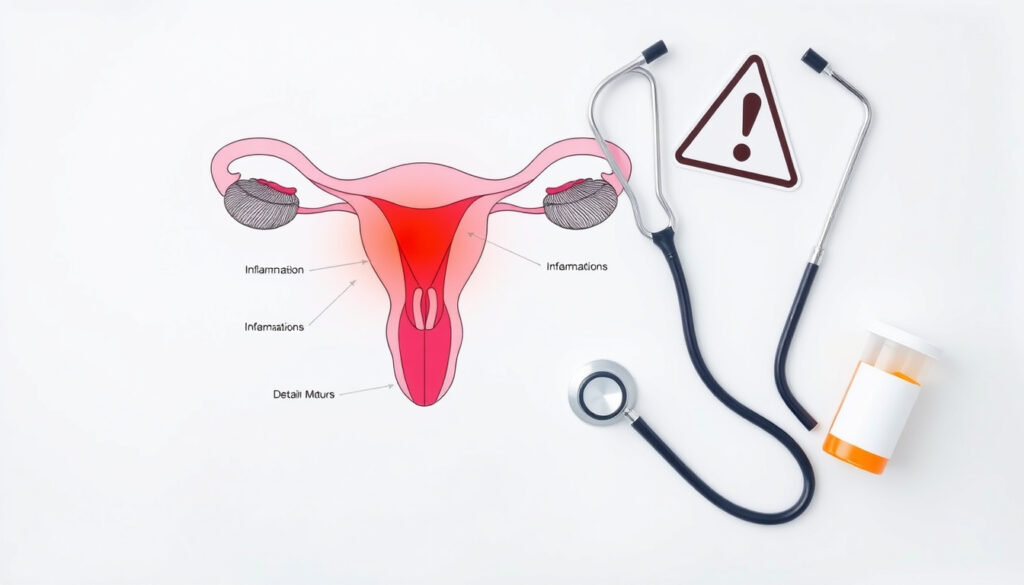
Pelvic Inflammatory Disease Symptoms: First Signs & Treatment
Pelvic inflammatory disease doesn’t always send clear signals. The CDC (U.S. public health agency) warns that many cases are asymptomatic or produce only mild symptoms, making the condition easy to overlook. Understanding the subtle early signs and knowing when to seek care can mean the difference between a treatable infection and lasting reproductive damage.
Percentage of women affected by PID worldwide: Approximately 5% of reproductive-age women develop PID annually · Infertility risk after one episode: 12% to 15% risk of tubal infertility after a single PID episode · Common age group: Women aged 15–44 are at highest risk · Causative organism: Over 85% of cases are linked to sexually transmitted infections (Chlamydia or Gonorrhea) · Untreated PID duration before complications: As little as 2 weeks can lead to permanent fallopian tube damage
Quick snapshot
- Lower abdominal or pelvic pain (NHS (U.K. health authority))
- Abnormal vaginal discharge (Mayo Clinic (clinical research center))
- Pain during urination or sex (NHS (U.K. health authority))
- Irregular bleeding (Mayo Clinic (clinical research center))
- Fever and chills (NHS Scotland (regional health guidance))
- Untreated chlamydia or gonorrhea (CDC (U.S. public health agency))
- Bacterial vaginosis involvement (Mayo Clinic (clinical research center))
- Childbirth or miscarriage infection (NHS (U.K. health authority))
- IUD insertion (rare, first 4–6 weeks) (NHS Tayside (Scottish health board))
- Pelvic exam and cervical motion tenderness (NHS Scotland (regional health guidance))
- STI testing (NAAT) (CDC (U.S. public health agency))
- Ultrasound or laparoscopy if needed (Mayo Clinic (clinical research center))
- Broad-spectrum antibiotics (e.g., ceftriaxone + doxycycline) (CDC (U.S. public health agency))
- Partner treatment to prevent reinfection (NHS (U.K. health authority))
- Rest and follow-up tests (Mayo Clinic (clinical research center))
The table below summarizes the key statistics that define the scope of PID and its consequences.
| Fact | Value |
|---|---|
| Annual U.S. cases | Estimated 2.5 million women diagnosed per year |
| Infertility rate after multiple episodes | Up to 50% after three or more episodes |
| Ectopic pregnancy risk | 6–10 times higher in women with prior PID |
| Percentage of cases asymptomatic | Up to 50% may have mild or no symptoms |
| Treatment success rate with early antibiotics | >90% if started within 48–72 hours of symptom onset |
What are the first signs of PID?
What are 6 symptoms of PID?
- Lower abdominal or pelvic pain that may worsen with movement
- Abnormal vaginal discharge (heavy or unusual odor)
- Painful urination or pain during intercourse
- Irregular menstrual bleeding or bleeding between periods
- Fever and chills (especially in acute cases)
- Deep pain during sex
These six symptoms form the core of what clinicians look for when assessing possible PID. The NHS (U.K. health authority) lists pelvic pain, deep pain during sex, heavy or painful periods, bleeding between periods or after sex, and unusual vaginal discharge as the most common indicators. The Mayo Clinic (clinical research center) adds that urinary burning or frequency and fever can also accompany the infection.
What makes PID tricky is that symptoms can be mild or even absent. The CDC (U.S. public health agency) emphasizes that the condition often has no noticeable symptoms, which means it can be missed early. When symptoms do appear, they may be mistaken for other conditions — a topic we’ll cover later.
A woman who notices only mild pelvic discomfort and unusual discharge may dismiss it. But waiting even two weeks can allow the infection to scar the fallopian tubes permanently. The Mayo Clinic (clinical research center) warns that tubal damage can begin within days of the infection reaching the upper reproductive tract.
The implication: knowing these six symptoms by heart — especially the subtler ones like irregular bleeding or pain during sex — gives you a real chance at catching PID early.
What is the main cause of pelvic inflammatory disease?
What is the most common way to get PID?
- Untreated sexually transmitted infections (Chlamydia trachomatis and Neisseria gonorrhoeae)
- Ascending infection from the cervix to the upper reproductive tract
- Bacterial vaginosis and other vaginal flora imbalances
- Procedures that open the cervix (IUD insertion, hysteroscopy, abortion)
The primary route is clear: sexually transmitted infections that go untreated migrate upward from the cervix into the uterus, fallopian tubes, and ovaries. The CDC (U.S. public health agency) states that Neisseria gonorrhoeae and Chlamydia trachomatis are the dominant infectious causes. The NHS (U.K. health authority) adds Mycoplasma genitalium to the list of STI pathogens that can trigger the condition.
But STIs aren’t the whole story. The Mayo Clinic (clinical research center) notes that bacteria normally present in the vagina can cause PID when bacterial vaginosis is involved. And NHS guidance (U.K. health authority) says procedures that open the cervix — including IUD/IUS fitting, hysteroscopy, or abortion — can also introduce bacteria into the upper reproductive tract. The NHS Tayside (Scottish health board) specifies that IUD insertion raises risk mainly in the first 4 to 6 weeks, especially if a pre-existing gonorrhea or chlamydia infection is present.
What this means: the most common path to PID is an untreated STI, but the condition can also develop from bacterial shifts or after certain medical procedures. The NHS Scotland (regional health guidance) notes that chlamydia and gonorrhea are implicated in only about 25% of UK cases — meaning three-quarters of PID cases have other triggers.
How do I know if I’ve had pelvic inflammatory disease?
How to test yourself for PID?
- No home self-test exists for PID — laboratory tests are required
- Clinical diagnosis relies on pelvic exam, cervical motion tenderness, and STI testing
- Self-assessment checklists can help guide when to see a provider
- Mild or asymptomatic PID may only be discovered during an infertility workup
There is no at-home test for PID. The CDC (U.S. public health agency) explains that diagnosis depends on a pelvic exam where a clinician checks for cervical motion tenderness, adnexal tenderness, and signs of infection. The NHS Scotland (regional health guidance) lists adnexal tenderness and cervical motion tenderness as supportive findings. Laboratory tests — including NAAT for chlamydia and gonorrhea, blood tests, and ultrasound — confirm the diagnosis.
So how do you know if you’ve had it? If you’ve experienced any of the six symptoms mentioned earlier and didn’t seek treatment, there’s a chance PID was present. The Mayo Clinic (clinical research center) notes that up to 50% of cases have mild or no symptoms, and the condition is sometimes discovered only during an infertility workup when scarred fallopian tubes are found.
You can use a self-assessment checklist: have you had pelvic pain, unusual discharge, pain during sex, or irregular bleeding? If yes, and especially if you have a new sexual partner or are under 25, the NHS Tayside (Scottish health board) advises seeking a clinical evaluation. The trade-off: waiting too long raises the risk of permanent damage, while early treatment is straightforward and highly effective.
Can PID be cured?
What antibiotics treat pelvic inflammatory disease?
- PID is curable with appropriate broad-spectrum antibiotics
- Standard regimen: ceftriaxone plus doxycycline, often with metronidazole
- Early treatment reduces risk of long-term complications
- Sexual partners must be treated to prevent reinfection
Yes, PID can be cured. The CDC (U.S. public health agency) outlines a standard regimen of ceftriaxone (a single injection) plus doxycycline (oral, taken for 14 days), often with metronidazole to cover anaerobic bacteria. The NHS (U.K. health authority) follows a similar approach, emphasizing that treatment should start as soon as possible — ideally within 48 to 72 hours of symptom onset for a success rate above 90%.
Treatment success depends on two factors: speed and completeness. The Mayo Clinic (clinical research center) stresses that completing the full course of antibiotics is essential, even if symptoms improve. Sexual partners also need treatment to prevent reinfection — a point the NHS (U.K. health authority) makes explicitly. Without partner treatment, reinfection rates are high.
Antibiotics cure the infection, but they cannot reverse scarring that has already occurred. The CDC (U.S. public health agency) warns that tubal damage from PID is permanent. A woman who delays treatment may clear the infection but still face infertility or ectopic pregnancy because the fallopian tubes are already scarred.
The pattern: early treatment is highly effective at curing the infection, but the window for preventing permanent damage is narrow. For women under 25 with multiple partners, regular STI screening is the smartest strategy.
How long can PID go untreated?
What is often mistaken for PID?
- Damage to fallopian tubes can occur within weeks of infection
- Delayed treatment leads to chronic pelvic pain, ectopic pregnancy, and infertility
- Conditions mimicking PID: appendicitis, ovarian cyst rupture, endometriosis, ectopic pregnancy
- Prompt medical evaluation is critical to differentiate
PID can go untreated for weeks, months, or even years — especially when symptoms are mild or absent. But the clock on reproductive damage starts ticking quickly. The Mayo Clinic (clinical research center) states that permanent fallopian tube scarring can begin within weeks of the infection reaching the upper reproductive tract. The longer treatment is delayed, the higher the risk of irreversible damage.
What makes this particularly dangerous is that PID mimics other conditions. The NHS (U.K. health authority) notes that appendicitis, ovarian cyst rupture, endometriosis, and ectopic pregnancy can all present with similar pelvic pain. A NHS Wales (regional health guidance) document explains that PID is usually the result of ascending infection from the endocervix, causing endometritis, salpingitis, parametritis, oophoritis, tubo-ovarian abscess, or pelvic peritonitis — a cascade of inflammation that can be confused with other abdominal emergencies.
Five key facts about untreated PID:
- Infertility risk after one episode: 12% to 15% (CDC (U.S. public health agency))
- After three episodes: up to 50% infertility risk
- Ectopic pregnancy risk: 6 to 10 times higher in women with prior PID
- Chronic pelvic pain develops in about 20% of cases
- As little as 2 weeks of untreated infection can cause tubal damage
Why this matters: PID is a condition where the consequences of delay are severe and permanent. Differentiating it from other causes of pelvic pain requires a clinical exam and testing — guessing at home is not an option.
Steps to take if you suspect PID
- Recognize the early signs — lower abdominal pain, unusual discharge, pain during sex, irregular bleeding, fever, or painful urination. If you have any combination of these, especially after a new sexual partner, take it seriously.
- See a healthcare provider promptly — within 48 hours if possible. The Mayo Clinic (clinical research center) advises that early treatment dramatically improves outcomes.
- Get tested for STIs — a NAAT test for chlamydia and gonorrhea is standard. The CDC (U.S. public health agency) recommends testing for both pathogens as part of the diagnostic workup.
- Complete the full antibiotic course — even if symptoms improve within a few days. The standard regimen is ceftriaxone plus doxycycline, often with metronidazole, taken for 14 days.
- Ensure partner treatment — sexual partners from the past 60 days need treatment to prevent reinfection. The NHS (U.K. health authority) emphasizes this as a critical step.
- Follow up — a repeat evaluation after treatment confirms the infection has cleared. The CDC (U.S. public health agency) recommends a follow-up visit within 72 hours for patients with severe symptoms.
The pattern: each step builds on the last, and skipping any one — especially partner treatment or follow-up — can undo the progress made by antibiotics.
What we know and what remains unclear
Confirmed facts
- PID is primarily caused by ascending STI pathogens, especially Chlamydia trachomatis and Neisseria gonorrhoeae (CDC (U.S. public health agency))
- Early antibiotic treatment cures most infections with a success rate above 90% (Mayo Clinic (clinical research center))
- Untreated PID leads to irreversible tubal scarring, infertility, and ectopic pregnancy risk (CDC (U.S. public health agency))
- Up to 50% of cases may have mild or no symptoms (CDC (U.S. public health agency))
What’s unclear
- Optimal duration of antibiotic therapy for all cases — some guidelines recommend 14 days, but individual responses vary
- Precise prevalence in low-resource settings where diagnostic tools are limited
- The exact role of bacterial vaginosis as an independent cause of PID, separate from STI co-infection (Mayo Clinic (clinical research center))
The implication: the confirmed facts are strong enough to guide clinical action, but the gaps remind us that PID research still has room to grow.
Expert perspectives on PID
“The CDC recommends that all women diagnosed with PID be tested for chlamydia and gonorrhea, and that sexual partners from the past 60 days be evaluated and treated to prevent reinfection.”
— CDC STI Treatment Guidelines (2021) (U.S. public health agency)
“Many women with pelvic inflammatory disease have no symptoms, or only mild symptoms, which is why the condition is sometimes called a ‘silent’ infection. When symptoms do occur, they can include lower abdominal pain, unusual vaginal discharge, and pain during intercourse.”
— Mayo Clinic clinical review (clinical research center)
“PID can cause serious long-term health problems if not treated early, including chronic pelvic pain, ectopic pregnancy, and infertility. If you have pelvic pain, unusual discharge, or pain during sex, see a GP or visit a sexual health clinic.”
— NHS informational page (U.K. health authority)
Pelvic inflammatory disease is a treatable condition, but its success depends entirely on timing. The CDC (U.S. public health agency) is clear: early diagnosis and complete treatment cure the infection and prevent complications. For women who wait, the stakes are permanent. For a woman in her reproductive years who notices even mild pelvic symptoms, the choice is straightforward: see a provider now, or risk irreversible damage that no antibiotic can undo.
ncbi.nlm.nih.gov, en.wikipedia.org, iusti.org, pubmed.ncbi.nlm.nih.gov
Recognizing the early signs of pelvic inflammatory disease is crucial for preventing complications, and early signs of pelvic inflammatory disease provides a detailed overview of the first symptoms and treatment options.
Frequently asked questions
Can PID cause infertility?
Yes. The CDC (U.S. public health agency) reports that 12% to 15% of women become infertile after a single PID episode, and up to 50% after three or more episodes due to tubal scarring.
Is PID contagious?
PID itself is not contagious, but the STIs that cause it — chlamydia and gonorrhea — are highly contagious and can be transmitted through sexual contact.
What is the recovery time for PID?
Most women feel better within 3 to 7 days of starting antibiotics. The NHS (U.K. health authority) advises completing the full 14-day course even if symptoms improve quickly.
Can men get pelvic inflammatory disease?
No — PID is an infection of the female upper reproductive tract. Men do not have the same anatomical structures. However, men can carry and transmit the STIs that cause PID.
Does PID always have symptoms?
No. The CDC (U.S. public health agency) states that up to 50% of PID cases have mild or no symptoms, which is why the condition is often called a “silent” infection.
What happens if PID is left untreated for years?
Chronic pelvic pain, permanent tubal scarring, infertility, and a 6 to 10 times higher risk of ectopic pregnancy. The Mayo Clinic (clinical research center) warns that damage can be irreversible.
Can PID come back after treatment?
Yes — if a woman is reinfected by an untreated partner or by a new STI. The NHS (U.K. health authority) emphasizes that partner treatment is essential to prevent recurrence.
Related reading
- Lung Cancer Survival Rate by Stage and Age — medical condition data and symptom awareness
- Zinc and Castor Oil Cream: Uses, Benefits, and Safety — health and topical treatment reference
More related posts
 Portage Cars New Lynn – AA-Approved Used Cars
 Best Broadband Provider NZ 2025: Compare Top Internet Services
 Cast of Song Sung Blue: Who Sings, True Story & Facts (2025)
 New Balance Near Me: Store Locator & Podiatrist Picks
 SBW vs Gallen Fight Time: Australia, UK, NZ Start Times
 Peaky Blinders Season 6: Cast, Plot & Final Season Guide
 New Zealand Dollar to Indian Rupees – Current Rate and Conversion Guide
 What Time Is Evening? Afternoon vs Evening Boundaries