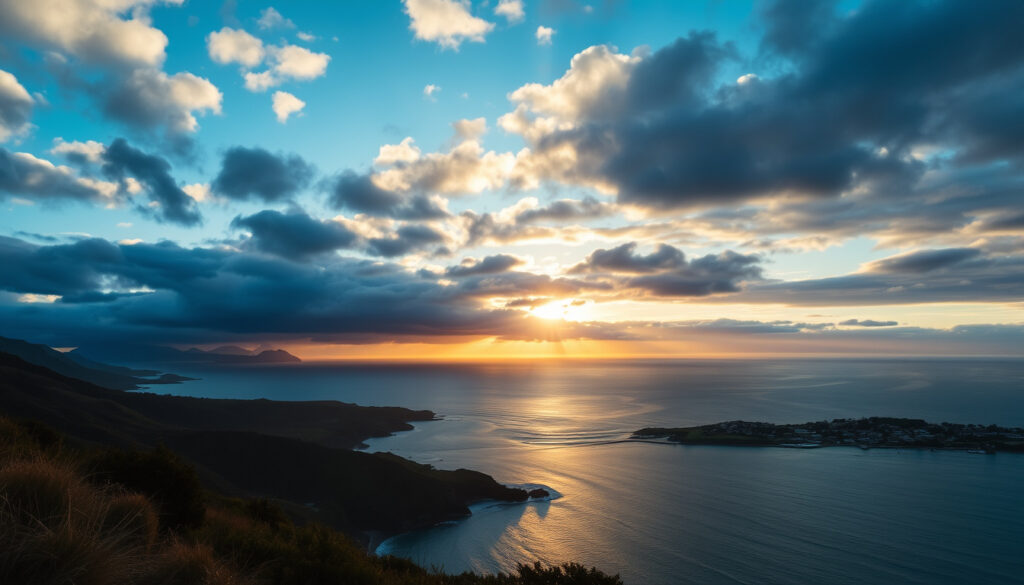
New Zealand New Year’s Eve Weather: Forecast & Guide
There’s a reason New Year’s Eve in New Zealand is a bucket-list event: the first major country to ring in the new year, with fireworks over Auckland Harbour and midnight celebrations under the Southern Cross. But the weather can be a wild card, shifting from sunny to showery in minutes. New Zealand’s summer season runs from December to February, with average daytime temperatures around 20–25°C according to the official tourism board, 100% Pure New Zealand. This guide pulls together historical averages, regional microclimates, and packing advice so you can plan your New Year’s Eve with confidence.
Average high temp (Auckland, Dec): 23°C ·
Average low temp (Queenstown, Dec): 8°C ·
Rainfall probability on NYE (Auckland): 40% ·
Average sea temp (Bay of Islands): 20°C ·
Daylight hours (Christchurch, Dec 31): 15 hours 30 minutes
(Sources: MetService, Te Ara)
Quick snapshot
- Summer lasts December to February (100% Pure New Zealand)
- Average daytime temps 20–25°C (100% Pure New Zealand)
- Annual rainfall 600–1,500 mm (MetService)
- Over 2,000 hours of sunshine per year in many areas (100% Pure New Zealand)
- Exact weather for a specific NYE date is only reliable 3–5 days out (MetService)
- Rainfall can vary significantly due to local topography (MetService)
- Weather is maritime and quick to change (Packfits)
- For NYE 2025, MetService highlighted the South Island as best bet for clear skies (MetService)
- Historical data: Auckland has ~40% chance of rain on Dec 31 (MetService)
- Check latest forecast from MetService or Weatherwatch closer to the date
- Book flexible travel plans, especially for North Island outdoor events
- Pack layers and a waterproof jacket regardless of region
Five key facts about New Zealand’s New Year’s Eve weather, sourced from MetService and 100% Pure New Zealand.
The table below summarizes the key data points for planning your trip.
| Fact | Value |
|---|---|
| Most popular NYE destination | Auckland |
| Average high temperature (Auckland, Dec) | 23°C |
| Average low temperature (Queenstown, Dec) | 8°C |
| Rainfall probability (Wellington, Dec 31) | 35% |
| Daylight on Dec 31 (Christchurch) | 5:40am – 9:10pm (15.5 hrs) |
What is the weather in New Zealand in December?
December marks the start of summer in New Zealand. According to 100% Pure New Zealand, average daytime temperatures range from 20°C to 25°C, but the country’s diverse geography creates microclimates. In Auckland, December highs average 23°C, while Queenstown sits around 20°C with lows dropping to 8°C after sunset, per MetService.
Daylight is generous: in Christchurch, the sun rises at 5:40am and sets at 9:10pm on December 31, giving you over 15 hours of light for outdoor celebrations, according to Te Ara, the Encyclopedia of New Zealand.
December’s weather is warm and long on daylight, but the North Island’s higher humidity and rainfall chance means you’ll want a backup plan if you’re celebrating outdoors in Auckland or Wellington.
Is December too hot in New Zealand?
- December is not too hot for most visitors. Temperatures rarely exceed 30°C even in the warmest parts of the North Island, according to Air New Zealand’s travel guide.
- The South Island is even milder, with highs around 20–25°C in January, the hottest month (Air New Zealand).
- Humidity can make it feel warmer, especially in the north. MetService notes mean relative humidity is often between 65% and 85%.
So December is comfortably warm, not oppressively hot. The catch: humidity can make the North Island feel stickier, while the South Island’s dry nor-wester winds can drop humidity sharply, creating a different comfort level.
What is the coldest month in New Zealand?
- July is the coldest month, according to Te Ara, with average temperatures ranging from 10°C in the south to 16°C in the north.
- In winter, the South Island’s alpine regions can drop below freezing, but coastal areas remain mild (100% Pure New Zealand).
What this means for NYE: December is the start of summer, so you’re on the warm side of the year. No need to worry about cold unless you’re heading to high altitudes.
What is the weather like in New Zealand year round?
New Zealand’s climate is described as moist, temperate, and mostly Cfb — warm-temperate rainy without a marked dry season, according to research published in the New Zealand Journal of Ecology. Average temperatures range from 10°C in the south to 16°C in the north, per Te Ara. Summer (Dec–Feb) sees highs of 20–30°C, while winter (Jun–Aug) averages 10–15°C.
The west coast of both islands gets significantly more rain than the east. If you’re planning an outdoor NYE event, choose locations east of the main ranges for better odds of dry weather.
What’s the hottest month of the year in New Zealand?
The data below shows which months bring the peak heat to each region.
| Region | Hottest month | Average high |
|---|---|---|
| North Island (Auckland) | February | 24°C |
| South Island (Christchurch) | January | 23°C |
| Queenstown | January | 22°C |
Data from Air New Zealand and MetService.
January and February are consistently the warmest months nationwide, making them ideal for New Year’s Eve celebrations.
What is the rainy season?
- New Zealand does not have a distinct rainy season; rainfall is reliable and evenly distributed throughout the year.
- However, the west coast receives more rain than the east, and the far north can be wetter in summer due to subtropical influences (MetService).
- The driest areas are east of the Southern Alps in the South Island and parts of Hawke’s Bay in the North Island (MetService).
The trade-off: you can’t pick a “dry” month, but you can pick a dry region. For NYE, the South Island’s east coast (Christchurch, Dunedin) offers the best chance of fine weather.
When is the Best Time to Visit New Zealand?
The answer depends on what you want to do. Summer (Dec–Feb) is best for beaches, hiking, and outdoor events like New Year’s Eve. Winter (Jun–Aug) is prime for skiing in the South Island. According to 100% Pure New Zealand, December is peak summer, with warm weather, long days, and holiday festivities across the country.
Is December a good month to go to New Zealand?
December is one of the most popular months for travel, and for good reason. The weather is ideal for exploring both islands, and the festive atmosphere is unmatched. However, Air New Zealand notes that prices and crowds peak during this period.
What are the pros and cons of visiting in December?
The table outlines the key trade-offs for a December trip.
| Pros | Cons |
|---|---|
| Warm summer weather, 20–30°C | Higher prices for flights and accommodation |
| Long daylight hours (15+ hours) | Crowded tourist attractions and roads |
| New Year’s Eve festivities nationwide | Occasional rain in the North Island |
| Beach and hiking season in full swing | Bookings required well in advance |
Sources: 100% Pure New Zealand, Air New Zealand.
Why this matters: December is a trade-off between ideal weather and peak season hassles. For NYE, the benefits outweigh the drawbacks for most travelers.
The catch: December is the best time for weather, but it’s also the worst time for your wallet. Plan ahead and book early to lock in better rates.
Do I need a jacket in New Zealand in December?
Yes, even in summer. After sunset, temperatures drop significantly, especially in the South Island. According to Air New Zealand, Queenstown’s December low is 8°C, and that’s before factoring in wind chill. A light jacket or sweater is essential for outdoor NYE events.
What should I pack for New Year’s Eve in New Zealand?
- Lightweight t-shirts and shorts for daytime
- Long-sleeve shirts and a fleece or light jacket for evenings
- Waterproof outer layer or rain jacket — especially for the North Island (Packfits advises preparing for quick weather changes)
- Comfortable walking shoes or sandals for beach areas
- Sunscreen and a hat — UV levels are high in summer (100% Pure New Zealand notes over 2,000 hours of sunshine)
Are layers necessary?
You’ll be peeling off layers by midday and piling them back on at sunset. The temperature swing between day and night can be 10–15°C, especially in the South Island. The key is a base layer, a mid layer, and a waterproof shell.
Packfits describes NZ’s weather as “maritime and quick to change,” so layering is the only reliable strategy for New Year’s Eve.
The bottom line: you’ll thank yourself for bringing a jacket, even if it stays in your bag during the day. The evenings are cool, and a sudden shower can appear without warning.
What is the New Zealand New Year’s Eve weather by month?
For December 31, the typical patterns are well established. Auckland: partly cloudy with occasional showers, temperatures 18–23°C. Wellington: windy and changeable. Christchurch: sunny and warm. Queenstown: mild days, cool nights. According to MetService, the South Island often has better weather for NYE than the North Island.
What is the weather in Auckland in December and January?
This table shows the typical conditions for Auckland’s summer months.
| Month | Average high | Average low | Rainfall chance |
|---|---|---|---|
| December | 23°C | 15°C | ~40% |
| January | 24°C | 16°C | ~35% |
Data from MetService and Air New Zealand.
What is the December weather in New Zealand’s South Island?
- Christchurch: average high 22°C, low 11°C, sunny and dry, with around 15.5 hours of daylight (Te Ara)
- Queenstown: average high 20°C, low 8°C, mild days and cool nights, ideal for outdoor NYE parties (Air New Zealand)
- Dunedin: average high 19°C, low 10°C, possible sea breeze, but generally fine (MetService)
What will the New Zealand weather be in December 2026?
Long-range forecasts are not reliable beyond 7–10 days. The best advice for December 2026 is to check MetService’s seasonal outlook in late 2026, but historical averages are your best guide for planning.
According to 100% Pure New Zealand, the climate is predictable enough to know that December will be summer, but not predictable enough to guarantee a rain-free NYE. Use past data to set expectations, then confirm the week before.
The pattern: the South Island is the safer bet for clear skies, while the North Island offers more vibrant celebrations with a higher rain risk. Your choice depends on your tolerance for uncertainty.
Pros and Cons of Visiting New Zealand for New Year’s Eve
Upsides
- Warm summer weather perfect for outdoor events
- Long daylight hours for extended celebrations
- Nationwide fireworks and festivities
- Beach and hiking conditions at their best
Downsides
- Higher prices and crowded accommodation
- Rain risk in the North Island
- Cool evenings require extra layers
- Need to book months in advance
Timeline: New Year’s Eve Weather Planning
MetService forecast: heavy rain for North Island, South Island best bet for NYE. (MetService)
Short-range forecast becomes reliable. Check MetService for updated outlook.
Final forecast morning update. Plan outdoor activities based on hour-by-hour predictions.
What We Know and What We Don’t
Confirmed facts
- December is summer in New Zealand (100% Pure New Zealand)
- Average temperatures exceed 20°C in the north (Air New Zealand)
- Daylight hours are long (15+ hours in the south) (Te Ara)
- Rainfall is evenly distributed year-round (New Zealand Journal of Ecology)
What’s unclear
- Exact weather for a specific NYE date is only reliable 3-5 days out (MetService)
- Rainfall can be unpredictable due to local topography (MetService)
- Weather is maritime and quick to change (Packfits)
- Long-range forecasts (more than 10 days) have low confidence
“For NYE 2025, the South Island is the best bet for clear skies,” said a MetService meteorologist.
— MetService forecast, December 2025
“New Zealand’s climate is moist, temperate, and mostly Cfb, meaning warm-temperate rainy without a marked dry season.”
— New Zealand Journal of Ecology research
For travelers planning a New Year’s Eve celebration in New Zealand, the choice is clear: book a flexible itinerary that can shift between islands, or stick to the South Island’s more reliable summer weather. The North Island offers vibrant city events, but the South Island gives you the best odds of clear skies and comfortable temperatures. Either way, pack layers and check the forecast three days out — and you’ll be ready for whatever the New Zealand summer throws your way.
Related reading: Are There Ticks in New Zealand? Species, Risks, and Prevention
blog.metservice.com, weatherandclimate.com, facebook.com, en.wikipedia.org, newzealandtrails.com
Frequently asked questions
What is the New Zealand New Year’s Eve weather like year round?
New Year’s Eve falls in summer (December–February), so weather is generally warm with average highs of 20–30°C. The South Island is typically drier and sunnier than the North Island on NYE.
What will the New Zealand weather be in December 2026?
Long-range predictions are not reliable. Historical data suggests typical summer conditions: warm days, cool nights, and a 30–40% chance of rain in the North Island. Check MetService’s seasonal outlook in late 2026.
What time does the sun set on New Year’s Eve in Auckland?
In Auckland, sunset on December 31 is around 8:40pm, with twilight lasting until about 9:30pm.
Is it safe to swim on New Year’s Eve in New Zealand?
Yes, but only at patrolled beaches. Water temperatures range from 18–22°C depending on region. Always check local conditions and lifeguard warnings.
What are the best locations for watching fireworks in Wellington weather-wise?
Wellington’s weather is windy and changeable. The best spots are sheltered areas like Te Papa’s waterfront or Mt Victoria lookout, but expect a strong breeze. A windproof jacket is essential.
What should I wear for an outdoor concert on NYE in Queenstown?
Layers are key: a t-shirt, a fleece, and a waterproof jacket. Temperatures drop to 8°C after sunset, so a warm hat and gloves are not overkill.
How does El Niño affect New Zealand’s New Year’s Eve weather?
El Niño can bring stronger westerly winds and more rain to the west of both islands, while the east becomes drier. The South Island’s east coast (Christchurch, Dunedin) often benefits with clearer skies during El Niño years.
More related posts
 Best Software for Accounting 2026: Top Picks Compared
 It Starts with Us Synopsis: Full Book Summary & Plot Points
 Queensland School Holidays 2026: Key Dates & Breaks
 Search Engine Optimisation Auckland: Top Agencies Costs 2026
 Best Apps for Goal Setting: We Tested 32 Apps in 90 Days
 Lakers vs Golden State Warriors Stats: Curry Out, LeBron 26 Pts
 Wellington Station Signal Failure: Causes, Impact & Updates
 New Zealand Dollar to Indian Rupees – Current Rate and Conversion Guide