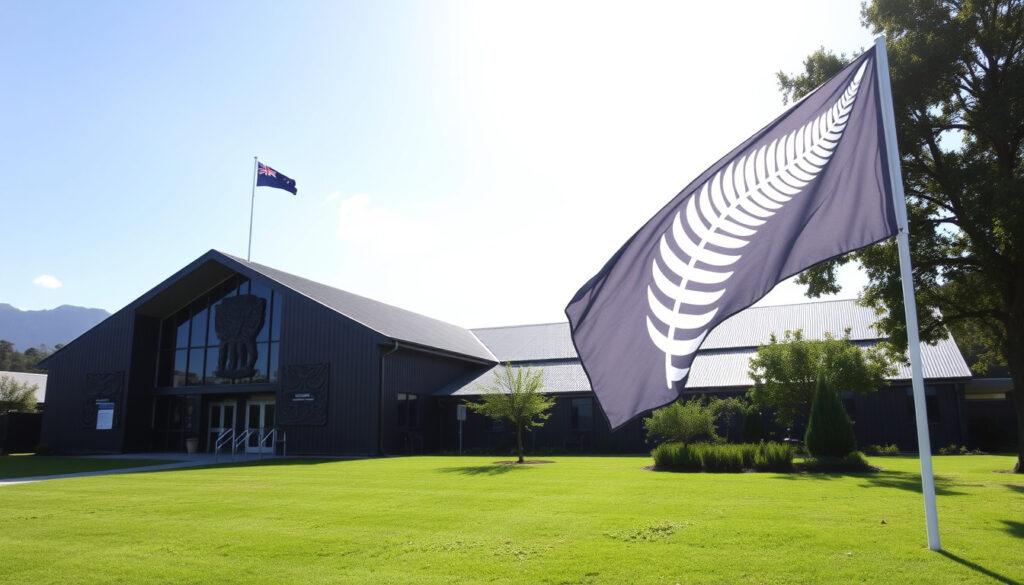
What Is a Charter School in NZ? Kura Hourua Guide
The term ‘charter school’ has been making headlines in New Zealand recently, as the government prepares to reintroduce them in 2024 (Ministry of Education (official education agency)). But what exactly is a charter school, and how does it differ from the public schools most Kiwi children attend? This article unpacks the Kura Hourua model—New Zealand’s unique take on charter schools—and what it means for students, parents, and the education system.
Funding source: Public (government) funding · Operator: Private sponsors · Māori name: Kura Hourua · Reintroduction year: 2024
Quick snapshot
- Publicly funded, privately operated schools (Ministry of Education)
- Also called Kura Hourua (Charter School Agency factsheet)
- Open to all students, no fees (NZEI Te Riu Roa (teachers’ union analysis))
- Whether charter schools produce better academic outcomes than public schools
- The long-term impact on the wider education system
- How many charter schools will eventually operate
- First introduced in 2013, abolished in 2019, reintroduced in 2024 (Ministry of Education)
- Charter School Agency established July 2024 (Ministry of Education)
- New sponsors signing 10-year contracts (Charter School Agency factsheet)
- Expected growth under new legislation (Charter School Agency (government operator))
Eight facts about the charter school model, one pattern: each highlights the tension between public funding and private control.
| Label | Value |
|---|---|
| Definition | State-funded but privately run schools |
| Funding | Government (per-student funding) |
| Operator | Private sponsors (e.g., trusts, community groups) |
| Māori name | Kura Hourua |
| First introduced | 2013 |
| Abolished | 2019 |
| Reintroduced | 2024 |
| Current legislation | Charter Schools Act 2024 |
The implication: New Zealand’s charter school journey has been a political pendulum, with the model twice introduced and once abolished in just over a decade.
What does a charter school mean in NZ?
Defining Kura Hourua
- Charter schools are described by the Ministry of Education (New Zealand’s education authority) as another type of state-funded school that gives educators and parents more choice.
- The Māori name kura hourua draws on waka hourua, a double-hulled canoe, symbolising partnership (Charter School Agency factsheet (government introduction document)).
- The charter school model is based on a contract between the Crown and a sponsor such as an organisation or business (same factsheet).
How charter schools operate in New Zealand
- The charter school operator, called the sponsor, signs a 10-year contract to meet specified educational outcomes in return for state funding (Charter School Agency factsheet).
- The Charter School Agency, established on 1 July 2024, negotiates and manages contracts and delivers funding (Ministry of Education).
- A separate Charter School Authorisation Board approves sponsors and can terminate contracts if requirements are not met (Charter School Authorisation Board (independent oversight body)).
Which one is better, charter or public school?
Differences in governance and flexibility
- Charter schools have more autonomy over curriculum, staffing, and mode of delivery than regular public schools (NZEI Te Riu Roa (teachers’ union analysis)).
- Public schools are fully operated by the state and follow the national curriculum.
- Charter schools can employ unqualified and unregistered teachers, while public schools require registered teachers (NZEI).
Academic outcomes: What the evidence says
- There is ongoing debate about whether charter schools outperform public schools in NZ. No conclusive NZ-specific research has been published yet, as the model was only reintroduced in 2024.
- Internationally, evidence is mixed; some studies show modest gains for certain student groups, while others find no significant difference.
The catch: charter schools trade standardisation for flexibility.
| Feature | Charter school | Public school (state) | Private school |
|---|---|---|---|
| Funding | Government per-student funding | Government per-student funding | Tuition fees |
| Operator | Private sponsor (trust, business, community group) | State (via Ministry of Education) | Private organisation |
| Curriculum | Can set own curriculum | Must follow national curriculum | Can set own curriculum |
| Teacher requirements | Can employ unregistered teachers | Must employ registered teachers | No state requirement |
| Accountability | 10-year contract with performance targets; Authorisation Board can terminate | Regulated by Ministry and ERO | Less government oversight |
| Fees | No tuition fees | No tuition fees | Tuition fees apply |
The pattern: charter schools sit in a middle ground — public money with private operational freedom.
Is charter the same as private?
Key differences in funding and regulation
- Private schools are funded through tuition fees and are not government-funded. Charter schools receive government funding and cannot charge tuition (NZEI).
- Charter schools must meet certain accountability standards under their contract; private schools have less direct government oversight.
Why charter schools are not private schools
- Because they are state-funded and open to all students without fees, charter schools are classified as a type of state-funded school, not a private school (Ministry of Education).
- However, the NZEI notes that charter schools are not part of the state schooling system even though they are state funded (NZEI).
Why this matters: The ambiguity feeds confusion. For parents, the key distinction is that charter schools are free and publicly accountable, but operate with more independence than traditional state schools.
Why are charter schools preferred?
Arguments in favor of charter schools
- Proponents say charter schools offer more choice and innovation, especially for communities that feel underserved by the standard system.
- Some communities see charter schools as a way to improve outcomes for Māori and Pasifika students, by tailoring curriculum to cultural contexts.
- Charter schools can provide specialised programmes (e.g., focused on trades, arts, or bilingual education) without the constraints of the national curriculum.
Criticisms and concerns
- Opponents, including the NZEI (New Zealand’s largest education union), raise concerns about accountability and resources being diverted from public schools.
- They warn that charter schools will not have the same regulation and safeguards as state schools, and that employees will lose collective employment agreement protections (NZEI).
- Critics also question whether the model improves equity or simply creates a two-tier system.
The pattern: the charter school debate in NZ comes down to flexibility versus systemic safeguards.
Upsides
- Greater curriculum and staffing flexibility
- Potential for tailored programmes for Māori and Pasifika students
- Performance contracts create accountability pressure
Downsides
- Weaker teacher qualification requirements
- Risk of diverting resources from public schools
- Less oversight compared to state schools
The pace of sponsor applications and contract signings over the next 12 months will reveal whether the model gains real traction or remains a niche option. The first cohort of new charter schools will set the precedent for accountability and performance.
How many charter schools are in New Zealand?
Current number and locations
- As of 2024, a small number of charter schools operate, primarily in Auckland and other urban areas.
- The government maintains a directory of charter schools organised by region (Charter School Agency).
- Specific numbers are not yet finalised as the new approval process is underway.
Growth since reintroduction
- The number is expected to increase under the new Charter Schools Act 2024.
- The Charter School Authorisation Board is accepting applications from potential sponsors (Charter School Authorisation Board).
What this means: the actual footprint of charter schools in NZ will depend on sponsor interest and board approvals in the coming year.
Timeline: Charter schools in New Zealand
- 2013 – First charter schools (partnership schools) introduced under the National-led government.
- 2019 – Charter schools abolished by the Labour-led government.
- 2024 – New legislation reintroduces charter schools as ‘Kura Hourua’. The Charter School Agency begins operations in July.
What we know and what remains uncertain
Confirmed facts
- Charter schools are publicly funded and privately operated.
- They do not charge tuition fees.
- They are open to all students.
- They are also known as partnership schools or Kura Hourua.
- They were reintroduced in 2024.
What’s still unclear
- Whether charter schools produce better academic outcomes than public schools.
- The long-term impact on the wider education system.
- How many charter schools will eventually operate.
Perspectives from key voices
“Charter schools – Kura Hourua – will give educators and parents more choice while keeping schools publicly funded.”
– Education Minister (2024), announcing the reintroduction of charter schools. (Ministry of Education)
“Charter schools will be taxpayer funded but privately operated, and they will not have the same regulation and safeguards as state schools. That’s a concern for equity and accountability.”
– NZEI Te Riu Roa (teachers’ union), in its 2024 factsheet. (NZEI analysis)
The reintroduction of charter schools in New Zealand marks a significant shift in education policy, but the jury is still out on whether Kura Hourua will deliver better outcomes or simply add another layer of complexity to an already strained system. For parents weighing their options, the choice is clear: charter schools offer flexibility and innovation, but at the cost of the standardised protections that come with the state system. The coming years will reveal whether the model earns its place or fades back into policy history.
Related reading: NCEA Level 3 Chemistry: Syllabus, Standards, and Requirements · Numeracy and Literacy Practice Tests NZ PDF: Free Download Guide
manamokopuna.org.nz, en.wikipedia.org, reddit.com, charterschools.govt.nz, usnews.com, publicservice.govt.nz, legacytraditional.org, teaonews.co.nz
Frequently asked questions
Do charter schools charge tuition?
No, charter schools in New Zealand are publicly funded and cannot charge tuition fees. They are free to attend.
How are charter schools held accountable?
Charter schools operate under a 10-year contract with the Crown, monitored by the Charter School Agency and the Charter School Authorisation Board, which can intervene or terminate contracts.
Can any student attend a charter school?
Yes, charter schools are open to all students and cannot select based on academic ability or background.
Are charter schools religious?
They can have a special character, including religious affiliation, but must comply with the terms of their contract.
How do charter schools hire teachers?
Charter schools can employ unqualified and unregistered teachers, unlike state schools which require registered teachers.
What is the difference between a charter school and a special character school?
Special character schools (e.g., integrated schools) are still part of the state system with a specific philosophy; charter schools are state-funded but privately operated with more autonomy.
How do I apply for a charter school in NZ?
Applications are made directly to the charter school. Contact the school for enrolment procedures.
More related posts
 2025 NZ Golf Open: Dates, Venue, Prize Money & Winner
 Sex on the Beach Cocktail: IBA Recipe, Ingredients & UK Tips
 Punjab Kings vs Delhi Capitals: 265/4 Thriller Scorecard
 How to Backup Android Phone – Complete 2025 Guide
 The Handmaid’s Tale Season 6: Release Date & Episode Guide
 Contact Lenses Near Me: Costs, Where to Buy & Safety Tips
 Oaks Sydney Goldsbrough Suites: 4-Star Heritage Hotel
 Lung Cancer Survival Rate by Stage and Age | Data & Facts